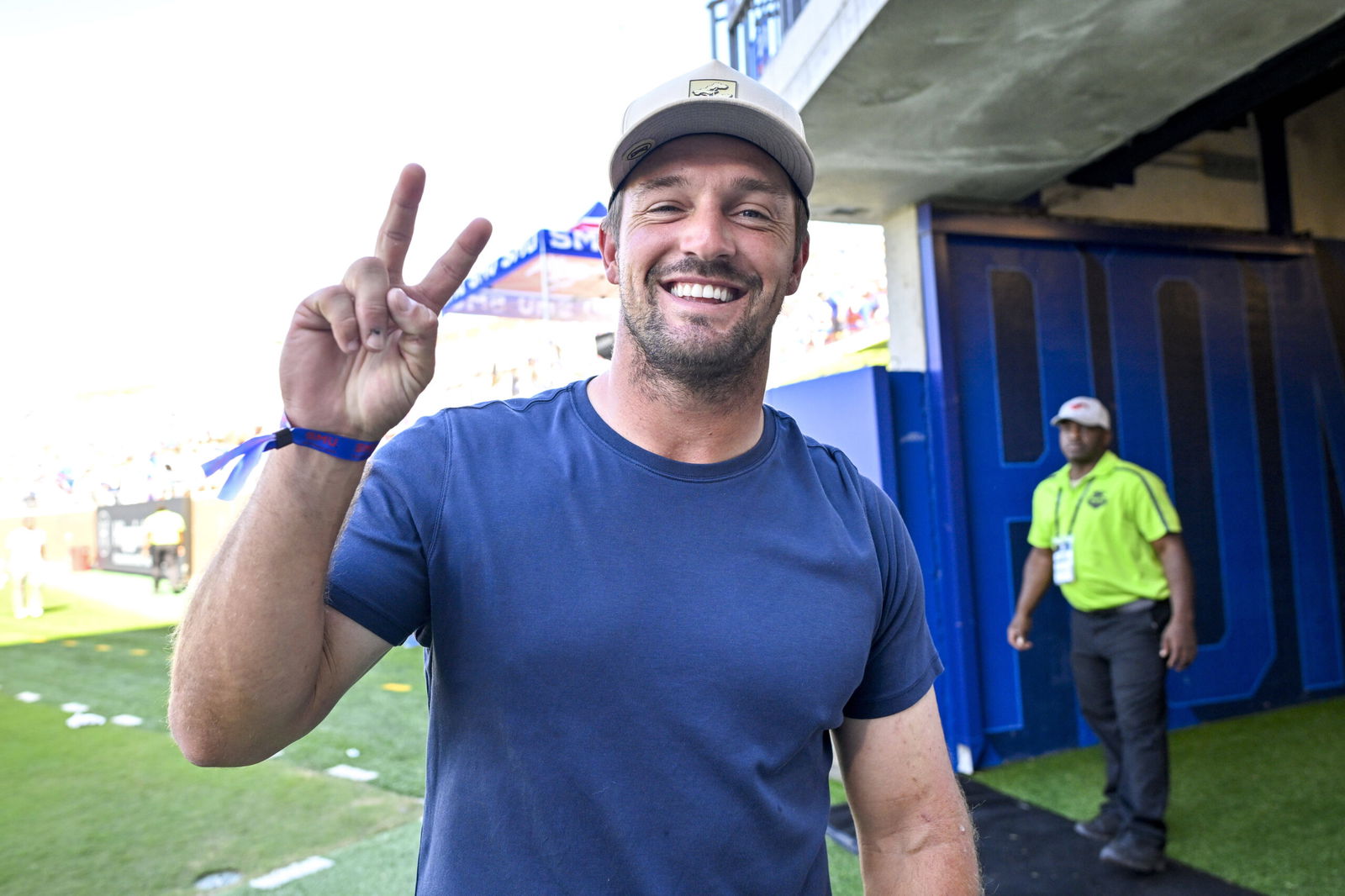
NCAA, College League, USA Football: Syracuse at Southern Methodist Oct 4, 2025 Dallas, Texas, USA Golfer Bryson DeChambeau smiles on the sidelines during the first half of the game between the SMU Mustangs and the Syracuse Orange at Gerald J. Ford Stadium. Dallas Gerald J. Ford Stadium Texas USA, EDITORIAL USE ONLY PUBLICATIONxINxGERxSUIxAUTxONLY Copyright: xJeromexMironx 20251004_jpm_an4_M27227
Turning Pro in 2016, Bryson DeChambeau has registered 8 career top 10 finishes in Majors and 12 worldwide victories. When he officially signed with LIV Golf in June 2022, the reaction across the golf world was instant and explosive. Some saw him as the ultimate power-era showman jumping to a new frontier, while others felt he was gambling the momentum he built after winning the 2020 U.S. Open.
Beyond the noise, one question matters the most: how did Bryson actually perform in the majors after switching to LIV, and how much did he earn during that transition?
Here’s the full breakdown.
Once DeChambeau joined LIV, the remainder of the 2022 major season became his proving ground. His first major start after the move came at Brookline for the 2022 U.S. Open, where he battled both form and recovery from wrist surgery. He finished T56, shooting 71–71–76–75 for a +13 total, a result that reflected a player trying to regain rhythm more than competing for the trophy.
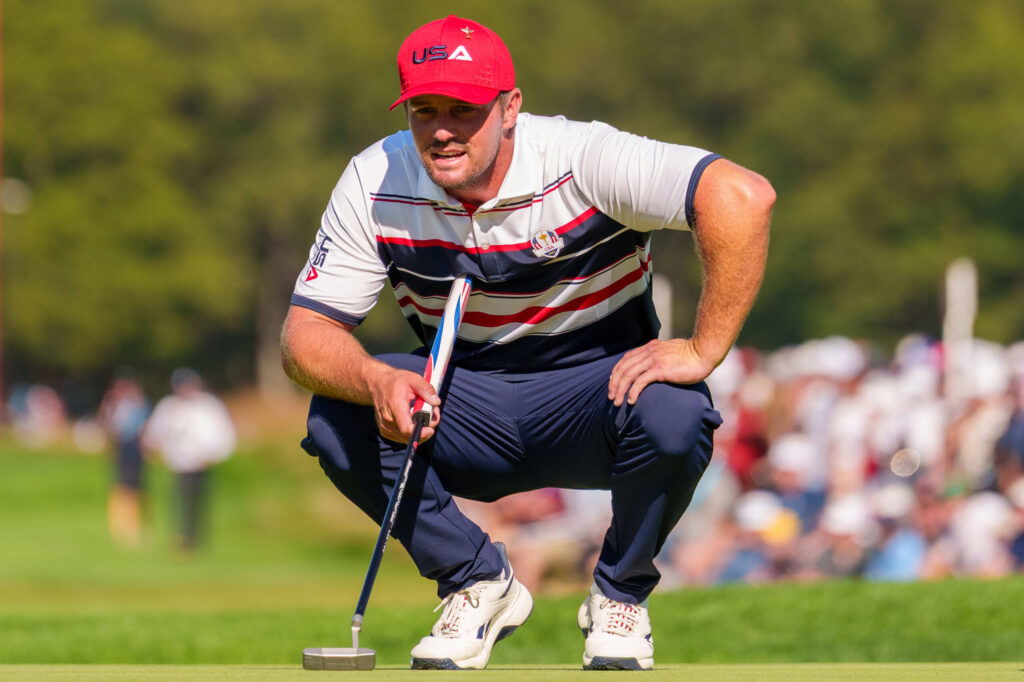
September 28, 2025, Farmingdale, Ny, United States: FARMINGDALE, NY - SEPTEMBER 28: Bryson DeChambeau of Team USA checks his line on hole 12 during the Ryder Cup - Singles Matches at Bethpage Black Golf Course on September 28, 2025 in Farmingdale, NY. Ryder Cup - Singles Matches PUBLICATIONxINxGERxSUIxAUTxONLY - ZUMAt139 20250928_aaa_t139_059 Copyright: xJasonxAllen/IsixPhotosx
A month later came The Open Championship at St Andrews, and this time his game found sparks of life. DeChambeau delivered his strongest major showing of the season, finishing T8 at −12, with a closing-round 66 that reminded fans why his power-plus-aggression formula is so dangerous when it clicks. It was his best Open finish to date and the lone standout in an otherwise turbulent injury-affected stretch.
Earlier that year, Augusta had been a struggle. At the 2022 Masters, DeChambeau shot 76–80, missing the cut by a wide margin and collecting the standard $10,000 MC payout. Then came the PGA Championship, or rather, the absence from it. Recovering from left wrist surgery, Bryson withdrew from the 2022 PGA Championship, marking one of the rare majors he couldn’t even tee up for.
Though 2022 offered only glimpses of his peak, it also marked the beginning of a dramatic shift in his earning structure, and that’s where the contrast becomes sharp.
Trending slideshow: Bryson DeChambeau’s High-Tech Golf Gear Obsession: Priciest Toys the LIV Golfer Buys
Aditi Singh
Bryson DeChambeau’s High-Tech Golf Gear Obsession: Priciest Toys the LIV Golfer BuysBryson DeChambeau has built a career around turning golf equipment into a science lab. The two-time US Open champion treats every club as a physics project, constantly modifying lofts, shafts, and head designs. He once said his goal was to “squeeze every inch of performance,” and his bag proves it. From One Length irons to long drive driver heads, Bryson’s gear obsession reflects a lavish commitment to technology that keeps evolving every season. James Marsh/Shutterstock/ImagoBryson’s most affordable upgrade was also one of his most influential choices. He adopted JumboMax XL grips in 2015 to support the upright setup required for his single-length irons. These oversized grips stabilized his hands and reduced excessive wrist action, helping him repeat the same motion through impact. The switch aligned with his ascent from amateur champion to PGA Tour winner and became a signature element of his equipment identity. JumboMax GripsBryson first shocked the golf world with Edel custom irons and wedges, all built to 37.5 inches, the length of a standard six iron. The matched setup allowed him to maintain an identical posture throughout the set. His US Amateur and NCAA titles highlighted the effectiveness of this approach. These irons were unconventional in appearance but became the foundation for his single plane mechanics that later shaped an entire retail movement. Aaron Doster/ImagoAfter signing with Cobra, Bryson worked directly with engineers to create the Cobra King Forged One Length irons. The R&D team built prototypes according to his measurements and testing patterns. Cobra later released the irons at retail, crediting his extensive collaboration. The set maintained the single-length concept but introduced refined forging and performance gapping, giving Bryson better consistency across long and short approaches during his early PGA Tour victories. Cobra GolfBryson’s move into an armlock setup in 2018 marked a decisive shift in his putting method. The SIK prototype featured Descending Loft Technology that was engineered to deliver a consistent launch regardless of impact variation. The putter supported his shoulder-driven stroke that minimized hand involvement. He won the Memorial Tournament using this model, proving the effectiveness of the design. The technology was later carried over when SIK was acquired by LA Golf. Aaron Doster/ImagoWhen Bryson became a free agent in 2023, he tested multiple brands before settling on Ping i230 irons paired with LA Golf Rebar shafts. He added Ping Glide 4.0 wedges in 46, 50 and 60 degrees, a notable change because he previously favored blade style wedges. The i230 set offered improved control in variable conditions while keeping his characteristic stability through impact. This represented his first significant departure from Cobra iron designs in seven years. PINGIn 2023, Bryson adopted the TaylorMade Stealth 2 Plus driver with a Project X HZRDUS T1100 shaft. He also replaced a traditional fairway wood with the BRNR Mini Driver set at ten degrees. The combination offered high ball speed with lower spin, reflecting his preference for strong lofted clubs. The adjustment aligned with his pursuit of increased control while retaining competitive distance, especially during periods when he alternated between different head shapes and setups. TaylorMade GolfBryson embraced long drive style construction when he moved into the Krank Formula Fire Pro LD driver set around five to six degrees. Krank uses hardened beta titanium with a carbon cup face that helps maintain stability at extreme swing speeds. He paired the driver with matching Krank fairway woods at low lofts to manage spin. FutureBryson advanced his iron technology again by working with LA Golf to develop proprietary prototype irons and shafts tailored to his launch and dispersion preferences. The models incorporate unique face geometry and weighting to support consistent ball flight at high speed. His collaboration influenced shaft development across his entire bag. The BAD prototypes reflect an expensive, custom-engineered system built specifically for his biomechanics and data-driven testing.
You may like: Top 10 Nike Golf Shoes Every Golfer Should ConsiderAdam Cairns-USA TODAY SportsThe most advanced gear in Bryson’s modern setup is the Avoda prototype 3D printed irons. These irons feature face bulging technology similar to driver design, allowing gear effect to correct off-center hits and tighten dispersion. The construction blends a traditional blade profile with highly engineered curvature. The innovation represents a rare leap in iron design and fits Bryson’s approach to continual experimentation. The prototypes are among the priciest and most technically complex irons in professional golf.
You may like: The Smart Way to Choose Golf Clubs Like a ProGolf Digest