
Guide 101: Simple Adjustments Every Golfer Can Use to Stop the Slice
If your drives keep bending into the rough no matter how hard you practice, this guide breaks down the simple adjustment that can finally eliminate your slice.
A slice occurs when the ball curves from left to right for a right-handed player. This ball flight is created by an open clubface at impact, an out-to-in swing path, or a combination of both.
As a result, the shot moves away from the target line. However, once the cause is understood, the issue can be corrected with the right adjustments.
Step 1: Fix the Hands First to Change the Ball Flight
Begin with your hands. Your grip position has a direct effect on the clubface at impact. If your hands are turned too far left for a right-handed player, the face tends to stay open.
via Imago
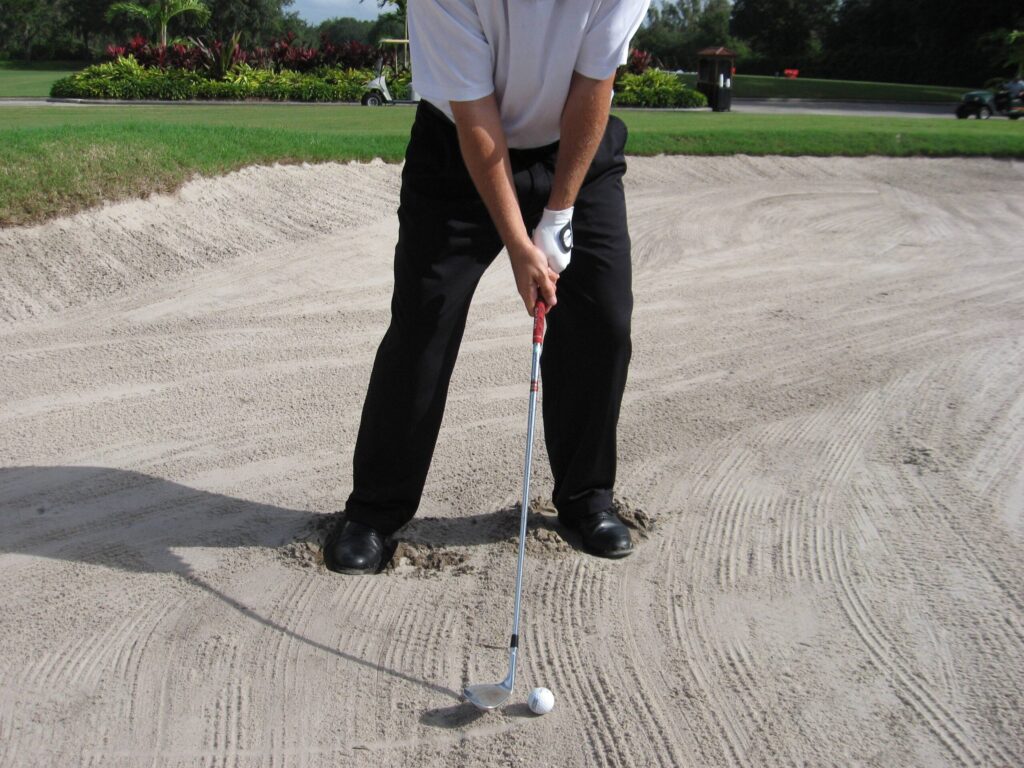
1 Open club face and stance for greeenside bunker shot..Avila head golf professional Chris Slattery. They show stances, grips and shots from the sand. They will go with our golf package on how to hit out of sand traps. The photos were taken at Avila Country Club. photos by Rodney Page PUBLICATIONxINxGERxSUIxAUTxONLY - ZUMAs70_ 1 Open Club Face and stance for Bunkers Shot Avila Head Golf Professional Chris Slattery They Show stances Grips and Shots from The Sand They will Go With Our Golf Package ON How to Hit out of Sand traps The Photos Were Taken AT Avila Country Club Photos by Rodney Page PUBLICATIONxINxGERxSUIxAUTxONLY ZUMAs70_
To correct this, rotate the lead hand slightly to the right until two or three knuckles are visible at the address. The “V” formed by the thumb and index finger should point toward the trail shoulder. Then place the trail hand under the lead hand, with its “V” aligned in the same direction.
Next, focus on pressure. Hold the club firmly enough to maintain control, but not so tight that tension builds in the forearms.
Step 2: Set the Line Before You Swing
Begin by selecting a clear target in the distance. Then identify a spot a few feet ahead of the ball on the same line. This creates a reference point for alignment.
Next, position your body parallel to that line. Place a club or alignment stick on the ground aimed at the target. Set your feet, hips, and shoulders alongside it. Think of your stance as running on a track that matches the target line.
After that, check the ball position. With the driver, place the ball near the lead heel. This promotes an upward strike and helps control spin.
Step 3: Calibrate Swing Path
A slice usually starts with the club moving across the ball from outside the target line to inside.
Because of that path, the ball curves away from where you want it to go. So the goal is simple: bring the club from inside the line and let it move outward after impact.

via Imago
Golfer swinging a golf club silhouetted against a dusk sky xkwx Golfer, Golf, Swing, Swinging, Club, Silhouetted, Sunset, Golf Club, Golf Swing, Silhouette, Dusk, Playing, Golf Course, Taking a Shot, Man, Male, Hitting, Motion, Sport, Standing, Close Up, Waist Up, Recreation, Leisure, Activity, Accuracy, Close-Up, Holding, Person, One Only, Adult, Front View, 30, 40, 30s, 40s, People, Outdoors, Outside, Horizontal
First, focus on the transition. When you reach the top of the backswing, avoid rushing the downswing. Let your arms lower before your body turns through.
That small shift helps the club fall into a better path. If you’re right-handed, it can help to feel like you’re swinging slightly to the right of the target instead of cutting across it.
Next, give yourself feedback. Place a headcover or small object just outside the ball along the target line.
Then swing without touching it. If you hit the object, the club is still coming over the top. If you miss it and the club moves outward after contact, you’re on a better track.
One good tip here came from a golf coach, James Hong of the Golf Digest. "I call it the swimmer’s motion. When I ask them to hold an alignment stick [across their chest] and do a crawl motion, they’ll move this way. If you notice, that’s the same pattern or motion as an over-the-top move."
Step 4: Control the Clubface Before It Controls the Ball
Even if the swing direction improves, the ball will still move right if the clubface is open at impact. So the next step is learning how to manage the face itself.
Start at the top of the backswing. Take a moment to notice your lead wrist. It should stay flat or slightly flexed. If it bends back, the face usually opens. Work on this slowly at first. Build the awareness before adding speed.
Then shift your attention to the downswing. As the club approaches the ball, let the face rotate back to square.
You can rehearse this with three-quarter swings. Pause near impact and check where the face is pointing. Repeat the motion until it feels familiar.
Written by

Aditi Singh
Edited by

Siddharth Shirwadkar