
“Just Make Him Invisible”: Rory McIlroy Reveals the Mindset That Helped Him In Golf
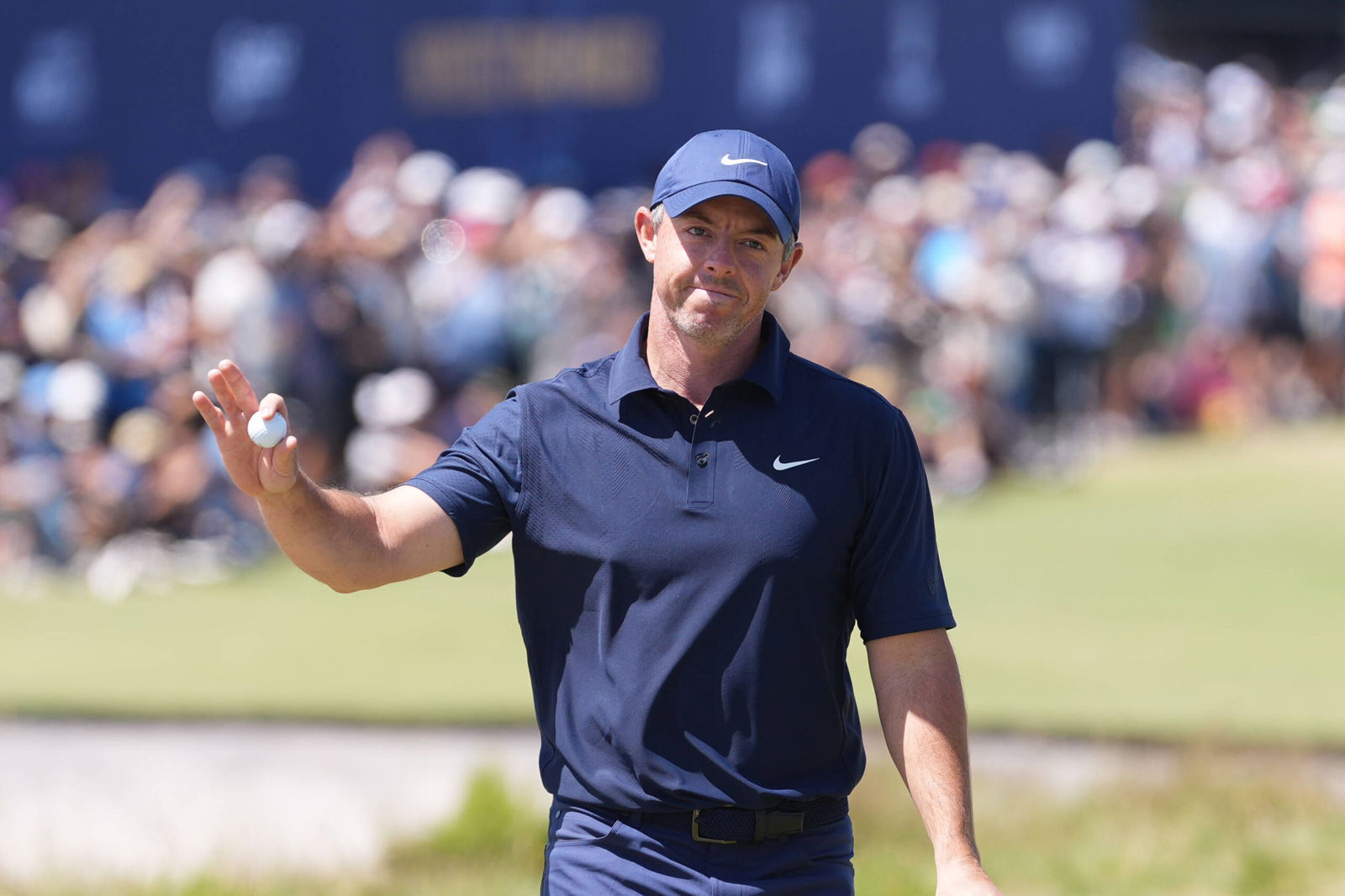
Imago
December 7, 2025, Melbourne, Victoria, Australia: Rory McIlroy of Northern Ireland acknowledges the crowd after a birdie on the 18th hole in his final round at the 2025 Crown Australian Open at The Royal Melbourne Golf Club in Melbourne, Victoria, Australia. Melbourne Australia - ZUMAl303 20251207_aaf_l303_046 Copyright: xSydneyxLowx
Rory McIlroy knew the biggest challenge on his mind during the Masters was not the course. It was the pairing. While talking about his pairing with Bryson DeChambeau, McIlroy revealed details of his golf mindset.
McIlroy said, adding that dealing with Bryson and the atmosphere around the pairing felt like the toughest part before he even hit the range.
As he did every day, McIlroy met sports psychologist Bob Rotella near the caddie area before warming up. When Rotella asked how he was feeling, McIlroy said he felt good about his game. But he also told him one thing was bothering him.
“The one thing I’m uneasy about is just the pairing.” Rotella’s response was simple. “Well, just make him invisible.”
McIlroy asked what that meant. Rotella explained, “Just don’t engage. Don’t look at him. Get lost in your own little world. You’ve got Harry beside you. Have him be your companion and stay in that world.”
That became the plan. Instead of reacting to Bryson, the crowd, or the moment, McIlroy focused inward and stuck to his routine. “That’s what I tried to do,” he said.
In fact, Rory McIlroy was able to achieve his first Masters win, getting $4.2 million out of the massive purse. But the psychologist helped him overcome the jitters of going 3,882 days without a major win. His words after the win summarised that.
"There were points in my career where I didn't know if I would have this nice garment over my shoulders, but I didn't make it easy today. I certainly didn't make it easy."
How Sports Psychologists Exactly Help Golfers
Like Rory McIlroy, almost every player faces such pressures and tensions during the play and even after. That’s where the sports psychologist's role comes into play. According to Dr. Paul McCarthy, these professionals work with players to improve focus, manage anxiety, build confidence, and handle pressure during tournaments.
Their primary task is to help golfers manage the stress and pressure associated with competition. How, you may ask. Well, they give some techniques such as deep breathing exercises, like calming nerves before and during play, while visualization helps players picture successful shots and create confidence.
Concentration in golf requires a high level of focus, so sport psychologists also teach various methods of concentration, such as goal setting and pre-shot routine development. Such routines may roughly consist of breathing exercises, visualization, and positive self-talk, which help golfers get their mind to the ball and keep away from the outside world.
Overall, mental training helps golfers stay composed and perform their best when it matters most.
Written by

Dolly Bhamrick
Edited by

Siddharth Shirwadkar