
Masters Once Blocked Local TV Coverage to Keep Fans Coming Through the Gates
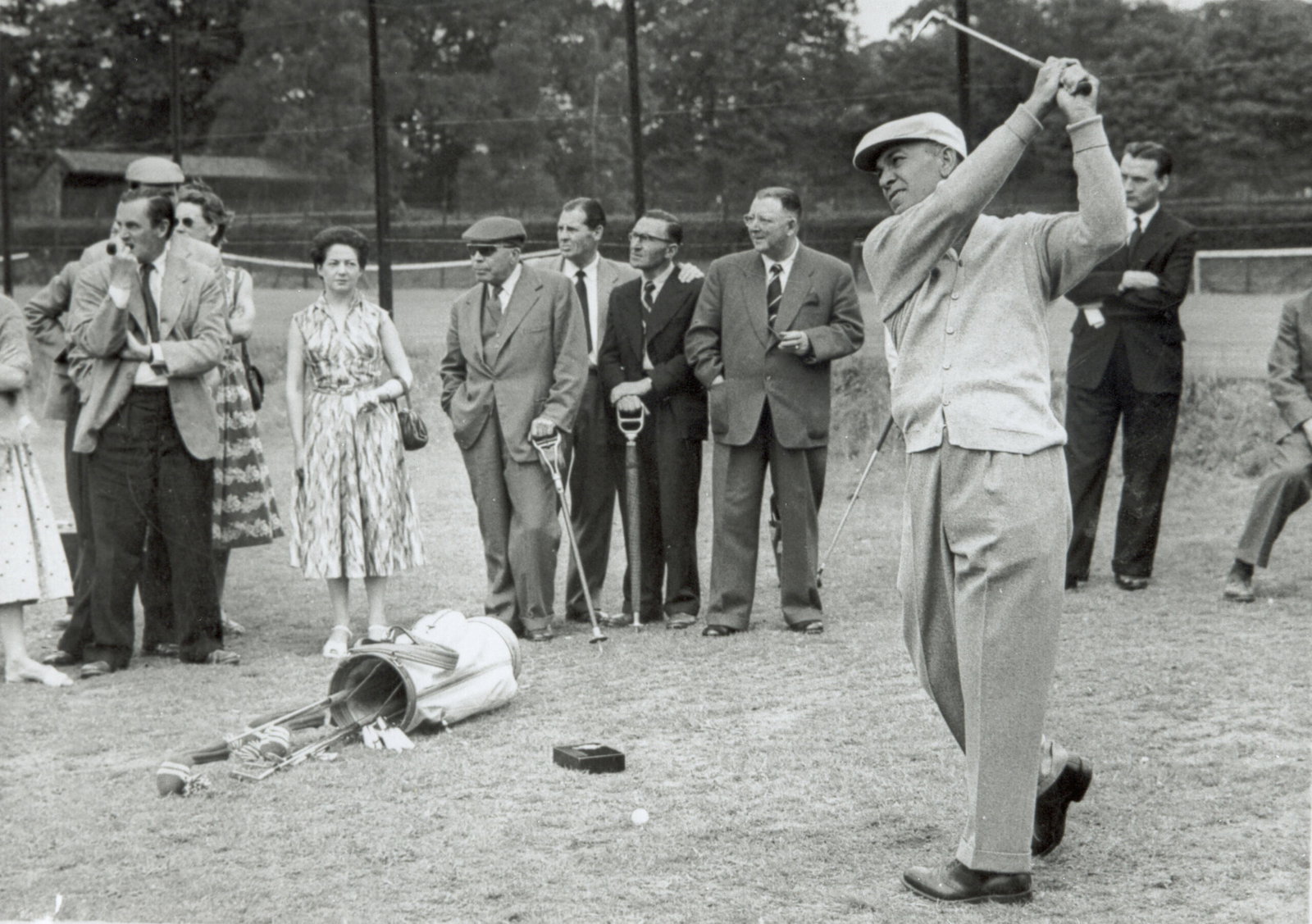
Historic archival images of Golf Ben Hogan practicing at Wentworth 1956 Hogan won 9 major championships during his career: 4 U.S. Opens 2 Masters Tournaments 2 PGA, Golf Herren Championships 1 Open Championship British Open Known for his legendary comeback after a near-fatal car accident in 1949, which many thought would end his career. Instead, he returned to win multiple majors afterward. Famous for his meticulous practice routine and innovations in golf swing mechanics. Hogans influence is still felt today through his instructional books and the Hogan swing, which many pros study. Copyright: xMarkxNewcombex
Historic archival images of Golf Ben Hogan practicing at Wentworth 1956 Hogan won 9 major championships during his career: 4 U.S. Opens 2 Masters Tournaments 2 PGA, Golf Herren Championships 1 Open Championship British Open Known for his legendary comeback after a near-fatal car accident in 1949, which many thought would end his career. Instead, he returned to win multiple majors afterward. Famous for his meticulous practice routine and innovations in golf swing mechanics. Hogans influence is still felt today through his instructional books and the Hogan swing, which many pros study. Copyright: xMarkxNewcombex
Augusta National has always followed its own rules for the Masters. In the 1950s, this even included what people could watch on TV.
When the Masters was first shown on TV in 1956, the club did not allow people living within 225 miles of Augusta to watch it. They wanted local fans to buy tickets and come in person rather than staying home.
So, for many years, people in Georgia, South Carolina, and nearby places could not watch the Masters on TV.
This rule worked for some time, but people started to dislike it in the 1960s. In 1969, Augusta National finally removed the blackout and allowed everyone to watch the tournament.
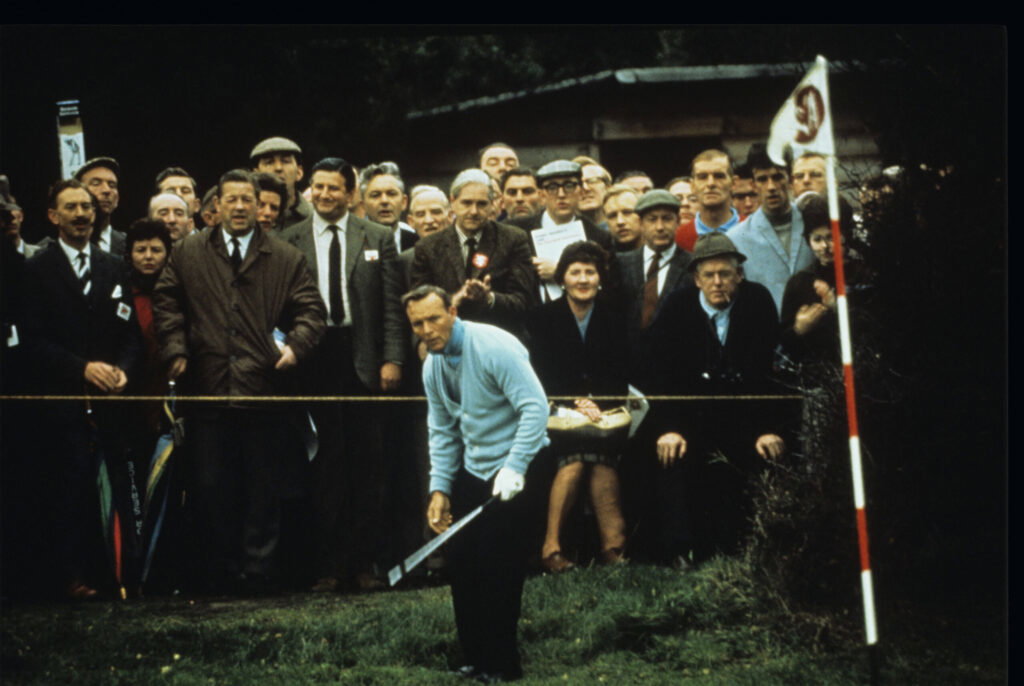
Historic archival images of Golf Arnold Palmer in the early 1960 s Arnold Palmer, known affectionately as The King, was one of golfs most charismatic and influential figures. His aggressive playing style, magnetic personality, and role in popularizing golf worldwide made him a beloved icon. Major Championships Won 7 total: Masters Tournament 4 wins 1958, 1960, 1962, 1964 U.S. Open 1 win 1960 The Open Championship 2 wins 1961, 1962 PGA, Golf Herren Tour Wins: 62 Helped popularize golf in the television age with his exciting style and friendly demeanor. Copyright: xMarkxNewcombex
Historic archival images of Golf Arnold Palmer in the early 1960 s Arnold Palmer, known affectionately as The King, was one of golfs most charismatic and influential figures. His aggressive playing style, magnetic personality, and role in popularizing golf worldwide made him a beloved icon. Major Championships Won 7 total: Masters Tournament 4 wins 1958, 1960, 1962, 1964 U.S. Open 1 win 1960 The Open Championship 2 wins 1961, 1962 PGA, Golf Herren Tour Wins: 62 Helped popularize golf in the television age with his exciting style and friendly demeanor. Copyright: xMarkxNewcombex
The move fits a pattern, and Augusta has never been shy about protecting what it has built, and ticket demand tells that story better than anything.
The club first limited ticket sales in 1963, after the Augusta Chronicle ran a photo of packed galleries under the headline "Mob scene at the 26th Masters."
By 1966, tickets sold out before the tournament opened its gates for the first time. The Patrons' list closed in 1972. The waiting list that replaced it closed six years later.
A tournament that once needed a TV blackout to fill seats now has a waitlist that hasn't moved in decades.
The Masters Has Always Been Comfortable Writing Its Own Rulebook
The TV blackout wasn't the only area where Augusta went its own way.
The club ran the Masters pairings; however, it saw fit that the In the late 1960s tournament committee selected, not formatted. Seeded pairings based on leaderboard position didn't arrive until 1969.
Even then, Augusta didn't follow the standard model. Rather than pairing first with second, the Masters sent the leader out with the third-placed player, and second with fourth.
Jack Nicklaus objected in 1981 when the format kept him from playing alongside leader Tom Watson in the final round. Augusta changed the system the following year.
The club has always moved on its own timeline. TV blackouts, ticket restrictions, and pairing formats were each adjusted when Augusta decided the moment was right, and not a moment before.
That instinct hasn't changed much heading into the 2026 Masters. The gates open April 9, the waitlist remains closed, and the tournament remains entirely on its own terms.
What's your favorite lesser-known Masters story? Let us know in the comments!
Follow Club Golf for more.
Written by

Sneha Abraham
Edited by

Kalp Thaker