
Tuesday, June 9, 2026Sports Chronicle
DailyClubGolf

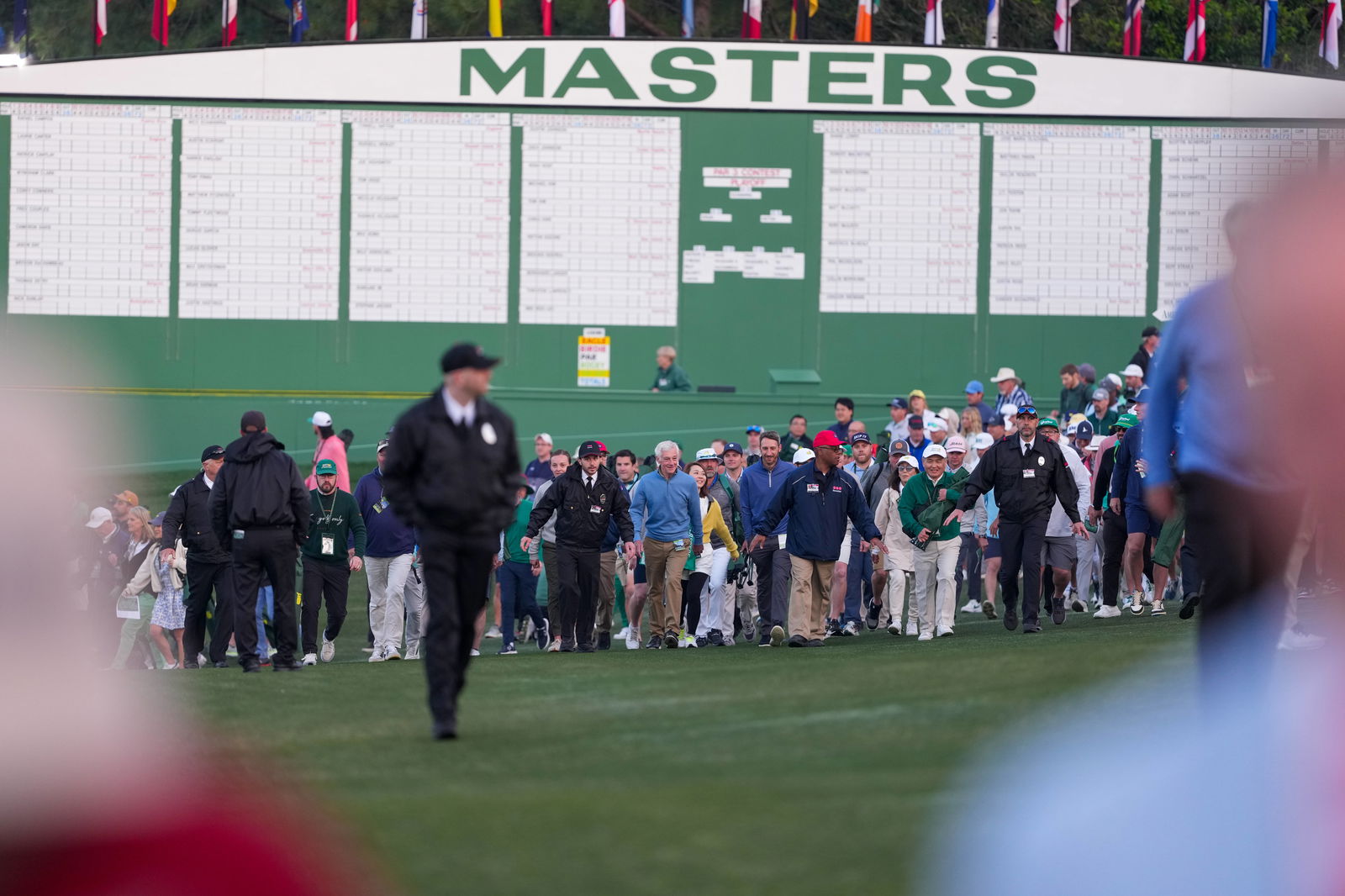
Masters Phone Ban Leaves No Room for Fans, Here's What Happens if They're Caught
via Usta

When a fan sneaks their phone into the Masters, Augusta National won't just kick them out.

They can even lose access to Masters tickets, and the person whose name is on them pays the price, not necessarily the person who got caught. That detail came from a well-placed Masters source, shared by writer Joe Kinsey on X on April 12.

"If you get caught with a cell phone, almost universally your tickets will be taken, and the holder won't get them next year," the source said.

"The person with them is not banned per se, but their tickets are lost."

Most people assume the rule only applies to whoever gets caught, but it doesn't work that way. "That's why it is so risky to give someone a ticket," the source continued. "If they screw up, it's the ticket holder who pays the price."

When handing a pass to a friend, if they pull out a phone, your annual Masters access disappears. Not their problem, but it's yours now.

Enforcement doesn't stop at the gate either. Augusta has people walking the course whose only job is finding phones. Smartwatches are harder to catch on the way in.

They tend to reveal themselves when someone starts talking into their wrist. Meta glasses and certain Oakley versions have become a growing headache too. Gate staff are trained on exactly what to look for.

"Trying to beat the system is a risky endeavor," the source said. "Not worth the risk."

People who've actually been inside Augusta tend to agree, just for different reasons.

Why the Masters Phone Ban Gets Defended by the Players Themselves

Jordan Spieth praised the policy after his 2015 Masters victory. "Everyone's very, very present," he said. "It's very nice, because you feel like everyone's there with you all the time."

The crowd feels different when no one is looking at a screen, and Joaquin Niemann saw that too.

"They're just focused on watching golf," Niemann said. "It changes a lot."

In 2019, Augusta chairman Fred Ridley said the club was different from others because of this policy.

So, would you give up your phone for a day at Augusta National? Share your answer in the comments.

Read more at Daily Club Golf!

Trending slideshow: 20 Reasons Augusta’s Masters Feels Like Golf’s Most Special Major

Eknoor Juneja 20 Reasons Augusta’s Masters Feels Like Golf’s Most Special Major
Augusta National isn’t just another golf course; it’s a place where time seems to pause, surrounded by flowers and history. Since 1934, what was once a commercial nursery has become home to the most exclusive event in sports, due to Bobby Jones. To see why this April tradition means so much, here are 20 reasons the Masters at Augusta feels like golf’s most special major. Todd Bennet/Newscom World/Imago
Augusta National officially crowns every visitor a "patron" to cultivate a sophisticated, traditional environment. This title transforms a rowdy sports crowd into elite guests, ensuring the tournament feels like a prestigious, private garden party. Curtis Compton/Action Plus/Imago
Security strictly forbids running to maintain a calm, dignified atmosphere across the grounds, even when the gates first open every morning. Enforcing this movement rule prevents the frantic chaos seen at other majors, protecting the quiet, respectful beauty of the landscape. Noushad Variyattiyakkal/SOPA Images/Imago
Augusta National dictates every camera angle and commentary choice to protect its brand image. Controlling the television production ensures the viewing experience remains focused on the pristine course rather than flashy, modern media trends. That’s why devices like laptops, tablets, drones, beepers, and any electronics that can send photos or videos are not allowed. Fran Caffrey/Golffile/Imago
Limiting commercial interruptions to just 4 minutes per hour allows the broadcast to focus entirely on the competition. Fewer advertisements mean fans enjoy a continuous flow of drama, making the Masters feel seamless. Petter Arvidson/Bildbyran/Imago
Legends like Gary Player and Jack Nicklaus return to hit honorary opening drives, officially launching the tournament. This ritual creates a powerful bridge between generations, allowing fans to see icons perform on the world stage. Andreas Gora/Imago
Alister MacKenzie’s legendary design favors strategy over brute power. Every hole, especially Amen Corner (the 11th), the course’s toughest with a 4.303 scoring average, rewards smart play, proving the greens are a true chess match. Mike Hewitt/Action Plus/Imago
Each hole is named after a signature plant, reflecting the course’s history as a nursery. Hole 13, called "Azalea," features more than 1,000 colorful bushes that make the course look like a scene from a postcard. Petter Arvidson/Bildbyran/Imago
Augusta defies modern sports inflation by selling the iconic Pimento Cheese sandwich for just $1.50. Keeping these 1980s-style prices is a stubborn, friendly tradition that makes the world’s most exclusive club feel surprisingly welcoming to every guest. Oliver Hardt/Imago
Evergreen customs like the Wednesday Par-3 Contest and the Champions Dinner have remained unchanged for over 70 years. These steady rituals provide a sense of comfort and reliability, ensuring the tournament’s soul stays identical for every new generation. Sammy Minkof/Imago
CBS broadcaster Jim Nantz immortalized the phrase “A tradition unlike any other,” perfectly capturing Augusta’s sacred status. This iconic tagline distinguishes the Masters from every other major, blending top-level golf with generational prestige. Flanigan Imagespace/ZUMA Press Wire/Imago
Augusta National remains the only major site that never rotates, making famous landmarks like Hogan Bridge permanent characters. This consistency allows fans to memorize every slope, creating a lifelong emotional bond with the landscape. Jason Moore/ZUMA Press Wire/Imago
Champions receive the Green Jacket, a tradition first established in 1949 with Sam Snead. Wearing this garment signifies permanent membership in an elite club of legends, transcending the mere presentation of a trophy or medal. via UIG/Imago
The defending champion personally helps the new winner into their Green Jacket inside Butler Cabin. This humble act of service between rivals perfectly captures the tournament's unique spirit of sportsmanship and class. via ZUMA Press Wire/Imago
Ben Hogan started the Champions Dinner in 1952, an exclusive Tuesday night tradition for past winners only. This private meal allows icons to share stories in a room strictly closed to the public and media. via ZUMA Press Wire/Imago
Reigning champions select the entire menu, like Ludvig Åberg’s upcoming 2027 Swedish feast. Choosing the meal adds a personal, global touch to an otherwise formal and strictly guarded club ritual. Danielle Parhizkaran/Imagn Images/Imago
With only about 90 players, the Masters features the smallest field of any major championship. This extreme exclusivity ensures that every pairing is high-stakes, focusing the world's attention on only the absolute best. Petter Arvidson/Bildbyran/Imago
Winning the Masters grants a player the right to compete for the rest of their life. This "forever" welcome allows 60-year-old legends to walk the same fairways as modern stars, bridging generations of golf. Petter Arvidson/Bildbyran/Imago
Top amateur champions receive prestigious invitations to compete alongside the world’s best professionals. Honoring these non-pros protects Bobby Jones’s own amateur legacy and keeps the spirit of pure, unpaid competition alive. Mark Newcombe/Visions In Golf/Imago
Built in 1958 as a shorter, 9-hole sanctuary, the Par-3 course allows players to use family members as caddies. Toddlers in tiny white jumpsuits steal the show here, humanizing icons before the serious pressure begins. Jeff Siner/Charlotte Observer MCT/Newscom World/Imago
Strict bans on cell phones and loud behavior protect the tournament’s timeless, focused atmosphere. These restrictions ensure that nothing distracts from the golf, preserving a sanctuary where the modern world feels miles away. Noushad Variyattiyakkal/ZUMA Press Wire/Imago

Written by

Sneha Abraham