
Phil Mickelson Is Golf’s Best Chip Artist; Here's Why
Imago
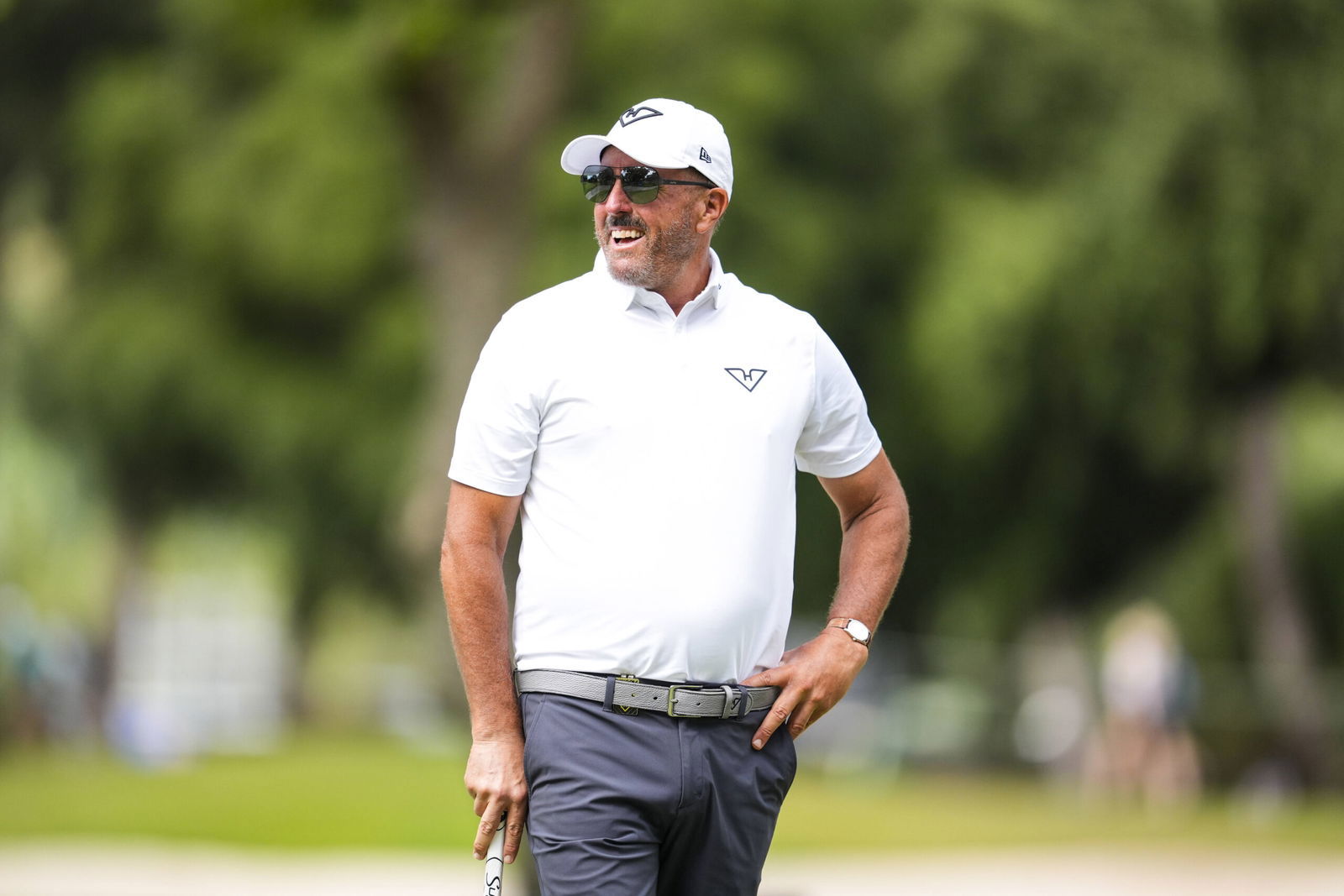
July 12, 2025, Cadiz, Cadiz, SPAIN: Phil Mickelson of Hyflyers team smiles during day two of the LIV Golf Andalucia at Golf Club Royal of Valderrama on July 12, 2025 in Cadiz, Spain. Cadiz SPAIN - ZUMAa181 20250712_zaa_a181_246 Copyright: xJoaquinxCorcherox
Most golfers chip to get out of trouble. Phil Mickelson chips to turn trouble into opportunity.
Mickelson never looks in a hurry around the greens; in fact, he slows down when other golfers decide to go with the safest option. This is the reason every golf fan knows his short game.
Phil’s edge is not built on one signature move but on a combination of smart choices, skills, and years of practice.
Icon Sportswire
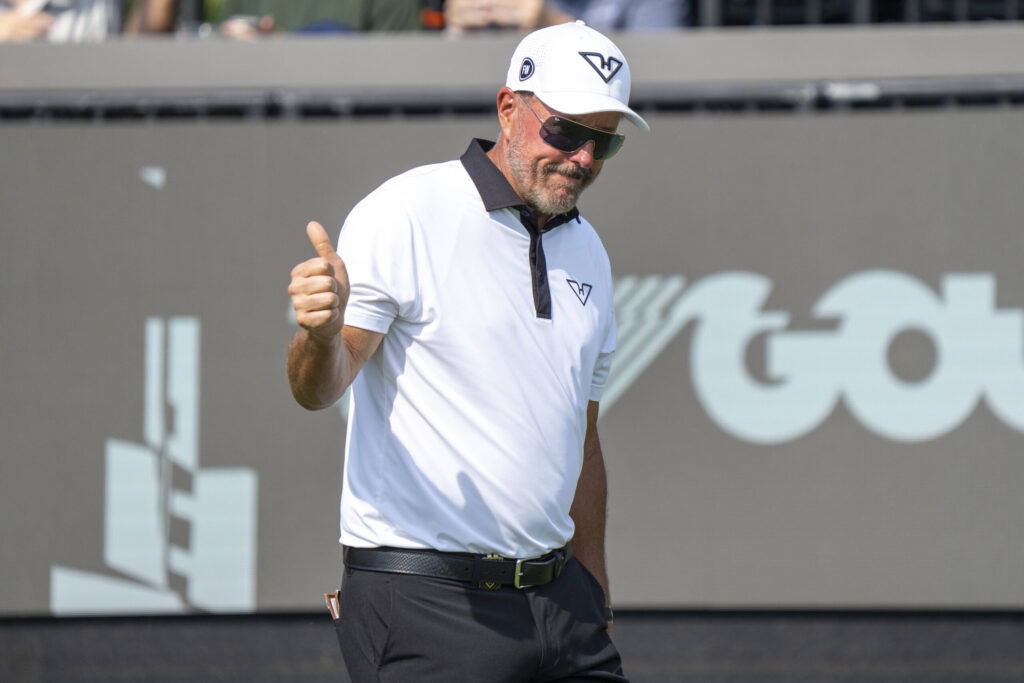
BOLINGBROOK, IL - AUGUST 10: Phil Mickelson gives a thumbs up to the crowd at the sixth tee during the final round of LIV Golf Chicago on Sunday, August 10, 2025 at Bolingbrook Golf Club in Bolingbrook, IL Photo by Ben Hsu/Icon Sportswire GOLF: AUG 10 LIV Golf Chicago EDITORIAL USE ONLY Icon224250810088
“Much like in the full swing, if you don’t turn your shoulders, you’re not able to get the club out in front on a good path,” Mickelson once said. “The same thing is true in chipping.”
But what does he do differently that no other golfers do?
He doesn’t see one shot. He sees options
Mickelson goes through his thought process every time he is about to hit the ball. He studies the curves, and at the end, he decides the kind of shot that is most suitable for that moment.
The decision he may come up with is bump-and-run, soft spinner, low skidder, or high flopper. Generally, this sort of liberty is a result of being on the spot, making mistakes, and most importantly, learning to trust rather than fear for many years.
His fundamentals are simple
As per Phil Mickelson, a golfer needs to keep all the weight forward. Why, you may ask. Because this helps them to keep the leading edge down and helps create solid contact. Hands position?
Well, hands need to be in front of the clubhead, as hands behind the clubhead often leads into thins and chunks shot. Use the ball position to hit different trajectories, and to drive it slowly, put it forward.
He practiced with intent, not volume
Phil didn't simply hit chips for the sake of repetition. He prepared for various scenarios.
Bad lies. Short-sighted misses. Shots that he might only use once in a tournament, but he had to be perfect. That method of training is the reason why, even now in his 50s, his short game is still very effective.
Written by

Dolly Bhamrick
Edited by

Oajaswini Prabhu