Rory McIlroy didn't get a penalty then, but Joaquin Niemann got it now; explaining the USGA Rule 1.2b
David Rosenblum, xCONxCHRONISx - IMAGO
David Rosenblum, xCONxCHRONISx - IMAGO
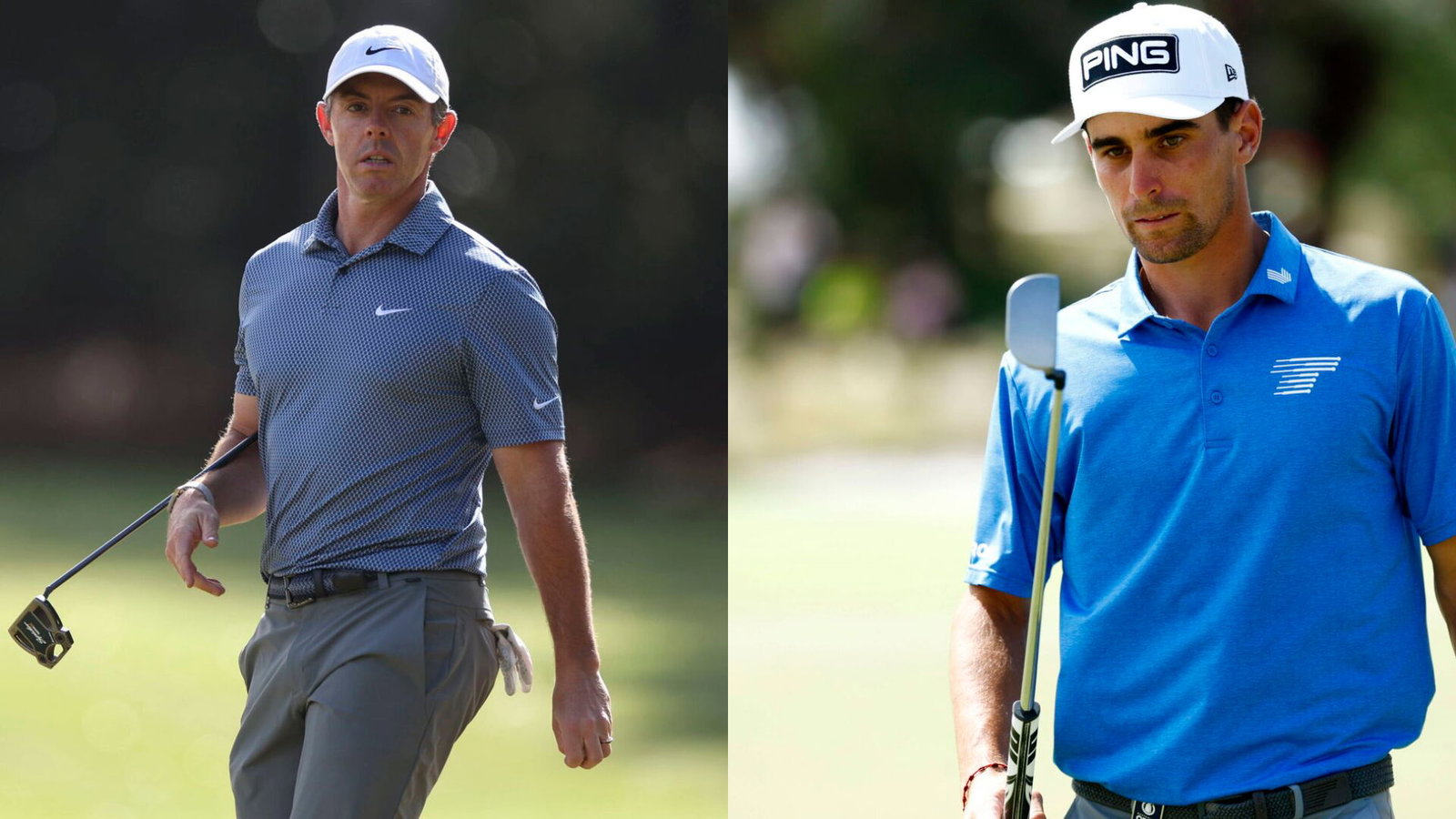
Joaquin Niemann made headlines for the wrong reason at the U.S. Open. The Chilean threw his club and was assessed a two-stroke penalty. However, fans were quick to point out that World No. 2 Rory McIlroy had done the same last year but escaped without a penalty.
Last year at Oakmont, McIlroy threw his club on the par-5 12th hole during the second round, and that was all he did. However, Niemann took things a little too far.
“Got visibly angry and kicked the white flag that another volunteer used to mark his ball - Continued to kick around the sand - Proceeded to chuck his iron from the fescue area approximately 50 yards to the very edge of the course on the right - Almost did not walk back for the club until a police officer delivered it to him,” wrote The Athletic’s Gabby Herzig on X.
The Athletic reporter received this information from a volunteer, Tristan Chang, who was right where the incident happened.
Niemann's anger stemmed from a denied request for relief from fire ants near his ball. However, there was no justification for his actions, which resulted in the USGA assessing him a two-stroke penalty. On the other hand, McIlroy's actions were limited to throwing his club in front of him.
Rule 1.2b of the Rules of Golf clearly states that “a Committee will be allowed to adopt a ‘Code of Conduct’ that sets the Committee’s own standards for how players should conduct themselves, and may set penalties less than disqualification (such as a one-stroke penalty or a two-stroke penalty/loss of hole penalty) for a player’s breach of those standards.”
Niemann’s actions seemed to have crossed the line and certainly violated the standards of conduct. Interestingly, the Code of Conduct rule underwent a significant change in 2019.
The change of the code of player conduct rule
Before the change, the Code of Conduct policy was quite rigid and, in some sense, harsh.
The committee only had the right to penalize a player for misconduct through disqualification. Unless some other specific rule was breached, the committee had no authority to impose a lesser penalty for a player’s misconduct.
Several event committees vouched for a change, as they felt disqualifying a player for inappropriate behavior would be overly harsh.
Instead, the committees were willing to set and enforce standards that fit their particular needs and local norms of proper behavior.
As a result, the change came through in 2019, but committees still have the power to disqualify a player in cases of serious misconduct.
Follow Club Golf for more.
Written by

Avishek Sarkar
Edited by

Pulkit Prabhav