
Rory McIlroy Explains Why Hitting a Persimmon Head Is So Different From Modern Drivers

Imago
2025 Amgen Irish Open, The K Club, Kildare 4/9/2025 Rory McIlroy wearing his Masters jacket during a panel interview Rory McIlroy wearing his Masters jacket during a panel interview 4/9/2025 PUBLICATIONxNOTxINxUKxIRLxFRAxNZL Copyright: x INPHO/BryanxKeanex INP_2529
Golf equipment often confuses beginners, but when a major winner breaks it down, it becomes easy. Rory McIlroy recently did so and explained why a persimmon-headed club feels worlds apart from using today’s modern drivers.
“There’s a lot of difference. You certainly have to focus on a center strike a lot more. Most persimmon heads are matched up with a steel shaft, so you feel like you have to wait on it a little bit longer,”
Before Rory McIlroy even talked about swing feel, the numbers told a clear story. As per the test conducted by Sports Illustrated, McIlroy’s ball speed was 168.6 mph with 255.7 yards of carry and 4,410 rpm of spin. The result was far below his PGA Tour averages with modern metal drivers.
Imago
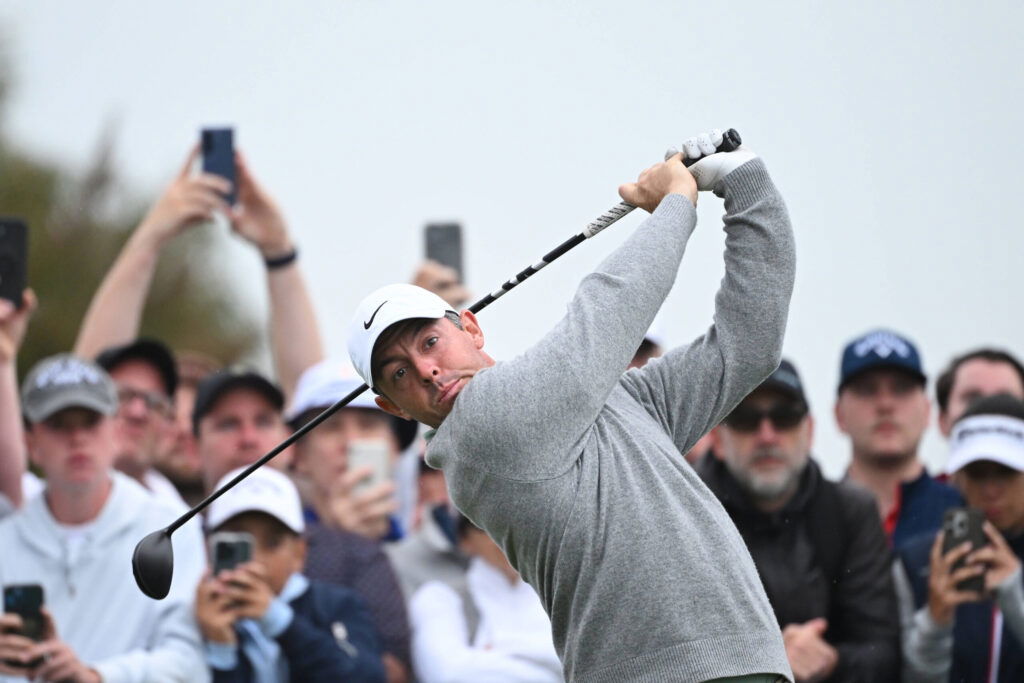
GOLF AUSTRALIAN OPEN, Northern Ireland s Rory McIlroy tees off on the 3rd hole during round three of the Australian Open Golf tournament at the Royal Melbourne Golf Club in Melbourne, Saturday, December 6, 2025. NO ARCHIVING, EDITORIAL USE ONLY MELBOURNE VICTORIA AUSTRALIA PUBLICATIONxNOTxINxAUSxNZLxPNGxFIJxVANxSOLxTGA Copyright: xJAMESxROSSx 20251206159905791285
And that's what McIlroy established. “If you hit it with persimmon wood, it just doesn’t spin at all. You’ve got to try to add spin. Like the old days, you used to see the guys with a lot of lag or a lot of downcock.”
Before, players used to rely on this technique to control the ball because persimmon heads were smaller, less forgiving, and required precise timing.
“That’s the way I feel like I have to swing a persimmon head to really make it work,” McIlroy added. It explains very well that modern equipment has simplified power, while persimmon needs precision, timing, and technique.
And Rory McIlroy has some experience with the persimmon head
Back in 2023, Rory did an experiment about the persimmon club and used the experiment for a discussion about modern golf’s influence. He jokingly said, "Roll back the clubs, roll back the ball, roll back everything."
That difference clearly shows why older clubs demand precision. Wooden drivers are not nearly as forgiving, produce more spin, and have less ball speed. Punish off-center hits far more than today’s larger, high-MOI designs.
What are your thoughts about this comparison? Do tell us in the comments.
Written by

Dolly Bhamrick
Edited by

Siddharth Shirwadkar