
Tuesday, June 9, 2026Sports Chronicle
DailyClubGolf

USGA Launches Rules AI Tool To Make Golf Rules More Accessible
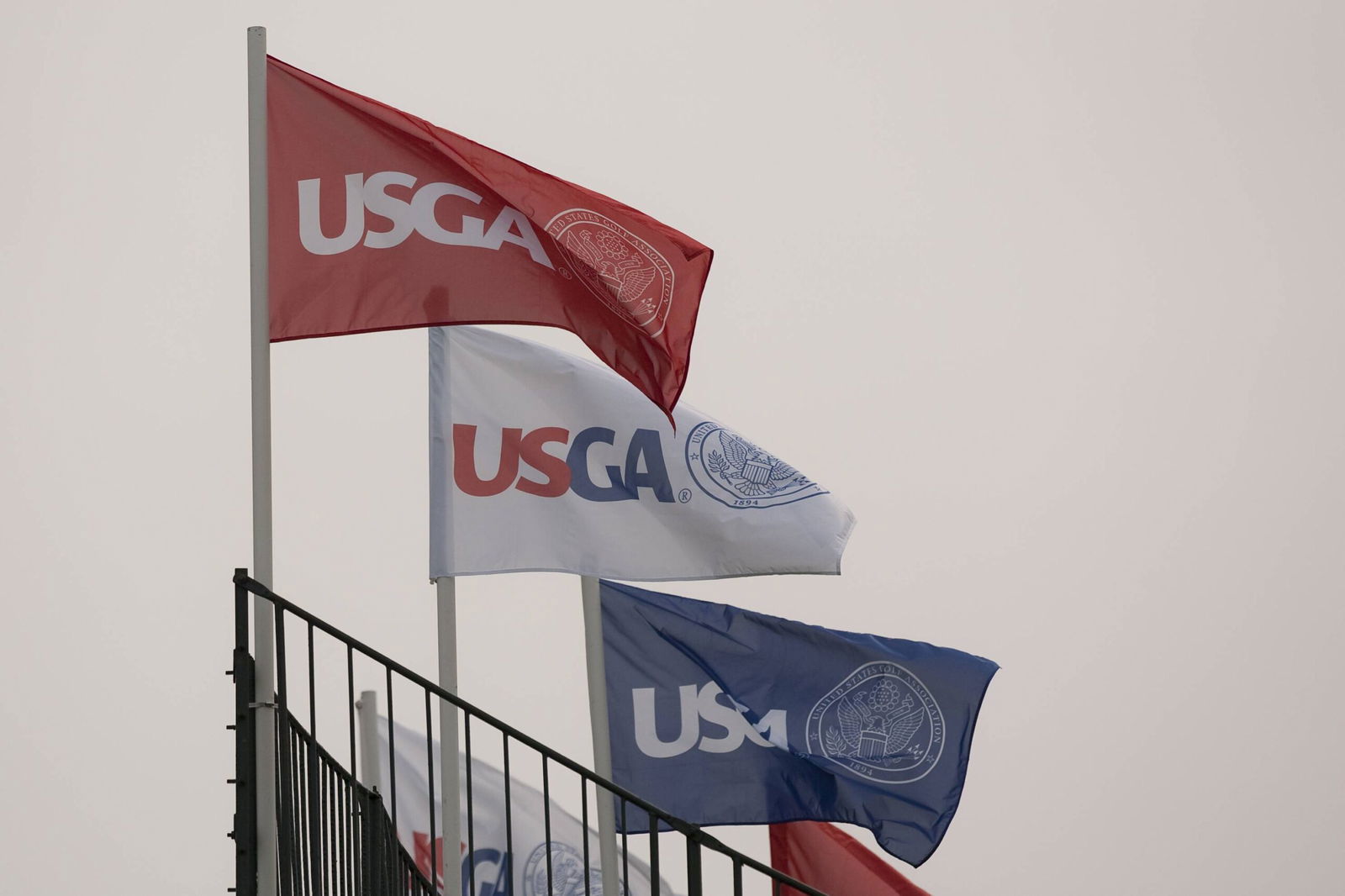
Bildnummer: 04560162 Datum: 17.06.2009 Copyright: imago/Icon SMI Fahnen der United States Golf Association (USGA) wehen im Wind - PUBLICATIONxINxGERxSUIxAUTxHUNxRUSxSWExNORxONLY (Icon4390906175446); Vdig, quer, Schriftzug o0 Golfverband US Open 2009, PGA Tour Bethpage / Farmingdale Golf Herren Einzel USA Totale Randmotiv Objekte Image number 04560162 date 17 06 2009 Copyright imago Icon Smi Flags the United States Golf Association USGA blow in Wind PUBLICATIONxINxGERxSUIxAUTxHUNxRUSxSWExNORxONLY Icon4390906175446 Vdig horizontal emblem o0 Golf Association U.S. Open 2009 PGA Tour Bethpage Farmingdale Golf men Singles USA long shot Rand motive Objects

With the goal of making the rules of golf more accessible, the USGA has brought a huge revelation in the sport. With the help of Deloitte, the USGA developed a technology that will assist golfers across the world.

Front Office Sports' reporter David Rumsey tweeted that "The USGA is launching a new Rules AI program that will live inside the GHIN app."

The program, announced by the USGA today, is in its pilot phase right now. With its help, the rules of golf will now be available to the golfers at the tip of their fingers.

“Our goal has always been to ensure the Rules are accessible and that golfers can find the information they need to play the game fairly, enjoyably and with confidence,” said USGA CEO Mike Whan.

Whan further stated that the technology will be "a bridge between tradition and innovation."

The move was highly supported by the USGA’s long-term professional services provider, Deloitte. Without the presence of Deloitte, the association would've lacked the prowess to build the backend of this innovation.

The GHIN app, using Rules AI, will allow golfers to access the rules at any time and from any place. 130 years of expertise and proprietary data have been deployed into this application, built to respond to the golfers’ queries.

Unlike the generic AI models, a “confidence-first” module has been created. The prototype has been run through more than 25,000 rules queries. Only authentic, credible, and latest updates regarding the rules will be provided to the golfers.

The GHIN app, presented by Sentry Insurance, has already been made accessible to certain golf clubs. With the help of real-world insights, Rules AI will be further remodelled with the aim of accuracy and a smooth user experience.

The spring of 2027 remains the target for the USGA to make the GHIN App accessible to all users. The six-member USGA Rules staff will cross-check the responses of the technology to make sure they align with the rules of the sport.

Until now, the golf committees have responded to the queries of the pros. There's a possibility that it might change with the introduction of Rules AI.

Will Rules AI Replace Golf Committees?

Interestingly, Rules AI will benefit the golf committees and make things easy for them, according to Craig Winter, the USGA’s director of Rules of Golf and amateur status.

“We’re just trying to get correct information into the hands of those making the decisions,” Winter said. “It’s not meant to supersede a committee’s decision.”

The technology will guide golf committees through unconventional queries and complicated rules.

Rules AI will be accessible by the golfers as well as the committees to provide instant solutions to rules-related discrepancies.

What are your thoughts on the latest technology of Rules AI by the USGA? Share them in the comments.

Read more at Club Golf!

Trending slideshow: 15 Golf Rules That USGA Should Get Rid of

Aditi Singh 15 Golf Rules That USGA Should Get Rid of
Golf is built on tradition, but some rules feel stuck in another century, and golfers know it. From pace of play frustrations to penalties that punish good shots, these outdated standards spark more debate than clarity. Here are the rules many players believe the USGA needs to rethink right now, and you might be surprised by how many you quietly agree with. VectorFusionArt/Imago
USGA Rule 4.1b(1) limits players to 14 clubs, a standard introduced in the 1930s as equipment evolved from hickory shafts to steel. Supporters say the cap encourages strategy by forcing golfers to choose versatile tools. Others believe the rule is outdated and that players should be free to carry more if they wish. Allowing additional clubs could give golfers more options, but the competitive impact remains a topic of debate. Thomas Zimmermann/Imago
Players do not receive free relief from footprints or disturbed sand in bunkers unless the condition qualifies as an “abnormal course condition” such as temporary water. Footprints left by other golfers do not fall under that category, which means players must play the ball as it lies unless taking unplayable relief with a penalty. Many golfers argue that this approach is unfair when the damage is caused by another player’s neglect, while others believe defining which marks deserve relief would create complicated rulings. Imago/Icon SMI
Under Rule 18.2a(1), a ball is declared lost if not found within three minutes, a reduction from the previous five-minute allowance. Many golfers feel this shortened window is too strict, given the harsh stroke-and-distance penalty. Restoring the five-minute limit would offer a fairer chance to locate the ball without meaningfully slowing down play. Titleist
Currently, golfers receive no relief when a boundary fence interferes with their stance or swing, even if the ball is still in bounds. Unlike other artificial objects, such as cart paths or buildings, boundary objects offer no free relief, forcing players to hit it as it lies or take penalty options. The proposed change suggests allowing the nearest relief (no closer to the hole) plus one club-length to ensure consistency and fairness. Millbrook Golf Club
Distance-measuring devices have been allowed under the Rules of Golf since 2019, though committees can still ban them, as many tours and majors do. Players may carry devices with slope features, but cannot use those functions. Supporters say quick yardages improve the pace of play, while critics prefer traditional methods. The PGA Championship remains the only major that permits them. USGA/Chris Keane
Rule 5.6b advises players to play their stroke within 40 seconds once they are ready, but this guideline carries no real penalty. Slow play continues to affect enjoyment and overall participation in the game. A proposed change would enforce the 40-second limit with a one-stroke penalty after a ball is found or dropped, ensuring faster, more efficient rounds. Scott Serio/Zuma Press/Imago
Relief options differ between yellow and red penalty areas, often causing confusion. Yellow areas allow stroke-and-distance or back-on-the-line relief, while red areas add a lateral two-club-length option. Standardizing these options for both colors, allowing lateral relief from yellow areas as well, would simplify the rule and reduce uncertainty for players. The R&A
Golf currently uses pace-of-play policies, not a strict per-shot timer. Players generally get 40 seconds, but enforcement occurs only when a group falls out of position, leading to inconsistent penalties. Advocates propose a universal 30-second shot clock to reduce slow play and create fairness through objective timing. TGL’s successful 40-second clock shows the system can work in competitive formats. Rob Schumacher/USA TODAY Sports Golfweek
Under Rule 6.3c, hitting a wrong ball leads to a two-stroke penalty and forces the player to correct the mistake, often resulting in a chain of severe penalties if the original ball can’t be found. The proposed change reduces this to a one-stroke penalty and allows the player to return to their previous ball or, if it’s lost, drop near the estimated location. Indiana Golf Journal
In 2021, the USGA and R&A proposed modernizing amateur status rules by allowing amateurs to accept sponsorships and cash prizes up to US$1000 without losing status. Restrictions on long-drive, putting, and skills competitions would be removed. Amateurs would only lose status by accepting prize money above the limit, giving paid instruction, becoming club professionals, or identifying as professional golfers. Robert Beck/USGA
Using lines on the golf ball to aid putting alignment remains controversial. Opponents argue it slows play, looks unnatural, and contradicts other alignment restrictions in the rulebook. Many believe these markings should be banned during play. Titleist
While golfers can repair damage on greens, such as ball marks and spike marks, there is no relief when a well-struck shot finishes in a divot. This inconsistency leaves players penalized by damage created by others. The proposed change would grant free relief from clear divots and sand-filled divots, ensuring fairness when the ball lies in an obviously altered patch of turf. David Ashdown/The Independent/Imago
Many golfers consider stroke-and-distance the harshest rule in the game. A shot barely out of bounds forces players to return to the original spot and add a penalty stroke, often turning one mistake into a multi-shot disaster. Critics argue that the punishment doesn’t match the error and needs to be modernized. USGA
Under Rule 16.3a(2), a player receives relief only when the ball is embedded in its own pitch mark. No relief is granted if the ball was pushed into the ground by someone stepping on it, despite this being an unnatural and unintended condition. If it can be reasonably determined that a ball was embedded by a person’s actions, relief should be allowed, with a drop at the nearest point not closer to the hole plus one club-length. You may like: Don’t Play Golf Without Knowing These 10 Rules Brian Spurlock Icon Sportswire via Imago
The current Rules of Golf require players to drop from knee height, a change introduced in 2019 to make drops more predictable and prevent balls from rolling outside the relief area. Critics argue the knee-height drop feels awkward, unnecessary, and slows play. Might interest you: 12 Proven Ways to Sharpen Your Short Game By: @jensen_custis/Instagram Courtesy: @thefatperez/Instagram

Written by

Avishek Sarkar

Edited by

Suyashdeep Sason