USGA’s Rule on Scottie Scheffler’s New Driver at the Hero World Challenge
Imago
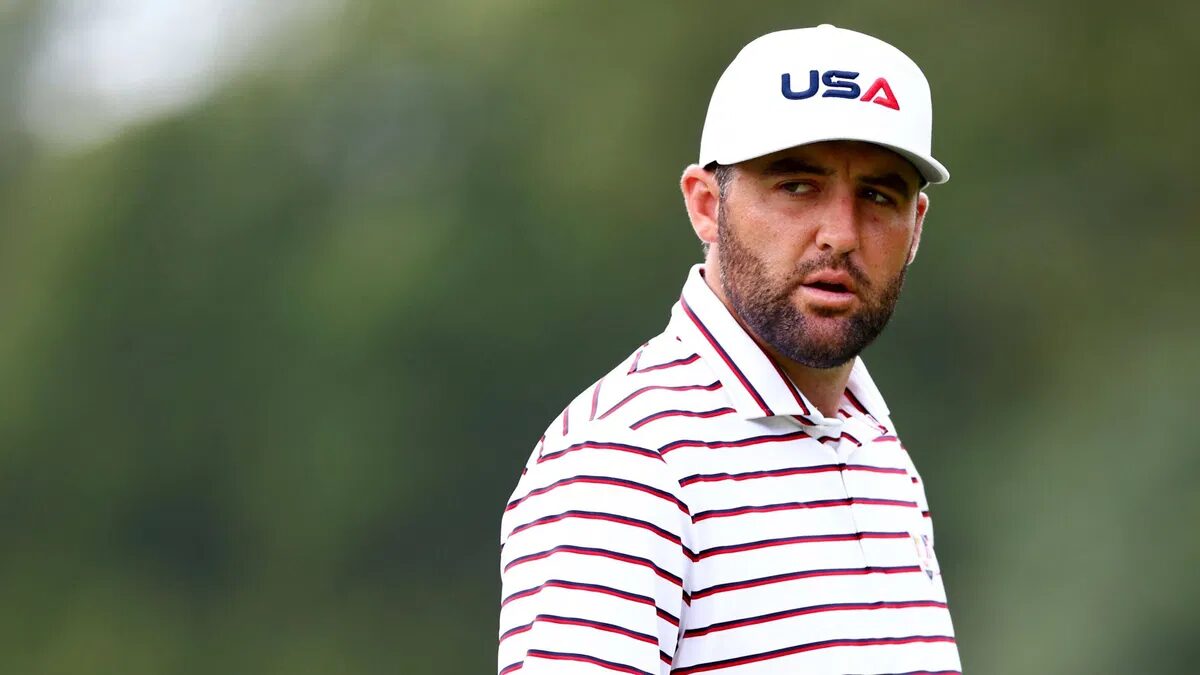
Scottie Scheffler of Team USA during his practice round. 2025 Ryder Cup, Wednesday Practice, Golf, Bethpage Black Golf Course, New York, USA - 24 Sep 2025New York Bethpage Black Golf Course New York NY United States of America EDITORIAL USE ONLY No use with unauthorised audio, video, data, fixture lists, club/league logos or live services. Online in-match use limited to 120 images, no video emulation. No use in betting, games or single club/league/player publications. PUBLICATIONxINxGERxSUIxAUTxHUNxGRExMLTxCYPxROUxBULxUAExKSAxCHNxDENxINDxITAxPORxESPxSWExTURxMEXxCOLxVENxPERxECUxBRAxARGxCHIxURUxPARxPANxONLY Copyright: xJamesxMarsh/Shutterstockx 15501089z
The United States Golf Association(USGA), working with The R&A, sets the equipment standards that define what players can use in competition. At elite events that adopt the Model Local Rule, a driver head must appear on the USGA Conforming Driver Heads List before it is allowed in play.
That list is updated each week, and it recently included three new TaylorMade models that point to the company’s next generation of drivers. The timing has made this week’s Hero World Challenge more than a limited-field invitational for World No. 1 Scottie Scheffler. It has become a live testing ground for a club that has only just cleared the governing body’s approval process.

Imago
PGA, Golf Herren Ryder Cup - Practice Round Sep 27, 2023 Rome, ITA Team USA golfer Scottie Scheffler speaks during a press conference, PK, Pressekonferenz for the Ryder Cup golf competition at Marco Simone Golf and Country Club. Rome Marco Simone Golf and Country Club ITA, EDITORIAL USE ONLY PUBLICATIONxINxGERxSUIxAUTxONLY Copyright: xAdamxCairnsx 20230927_ter_usa_141
Due to the USGA’s conforming list rule allowing any approved driver head to be used immediately in competition, even before it reaches retail, Scheffler arrived in the Bahamas with an 8-degree TaylorMade Qi4D in his bag. The model has not been released to the public, but its addition to the USGA’s Conforming Driver Heads List makes it fully legal under tournament conditions at the Hero World Challenge.
He has used the Hero as a proving ground before, and his approach reflects how elite players navigate the rules with their equipment teams. Once a club is listed by the USGA, a player can use it without concern about conformity, even if the model is months from public release. That is where the Qi4D stands, having joined the conforming list along with the Qi4D LS and Qi4D Max.
Rory McIlroy and Tommy Fleetwood have already put the model in play, and Scheffler saw four competitive rounds as a way to decide if the club fits his eye and numbers. As he put it, “Testing things out in competition is a good way of kind of seeing where you're at.”
That testing matters because the club replaces the Qi10 he used to win two majors and six PGA Tour titles this season. The intermediate step, the Qi35, never made its way into his rotation. Scheffler said, “I had a little bit of trouble getting into the Qi35 and I feel like we learned a lot throughout that process of what I like to see in a driver.” With the Qi4D, TaylorMade seems to have built the face and internal weighting around his preferences.
Images from testing show a pair of weights on the sole, a familiar speed pocket behind the face, and a blue face that Scheffler trusts at address. He added, “This driver’s been a really good fit for my eye, and that's always the first test for me.”
The USGA listing confirms multiple lofts across the Qi4D family. The standard Qi4D appears in 8, 9, 10.5, and 12 degrees for right-handed players, while the LS model comes with more forward weighting for lower spin. The Max version leans toward forgiveness with rear weighting. All use the carbon face technology that TaylorMade introduced in 2022 and carried through Stealth, Qi10, and Qi35.
For Scheffler, the rule creates a clear process. Once the USGA publishes the club, the competitive trial begins. What the scorecard shows over four days becomes the evidence.
As he said, “You can simulate competition at home, but coming out here and playing stroke play is always a bit different.” The real test comes this weekend.
Written by

Aditi Singh
Edited by

Oajaswini Prabhu