
When Seve Ballesteros Said, “It’s Not Worth It” and Chose to Finally Leave Golf Behind
USTA
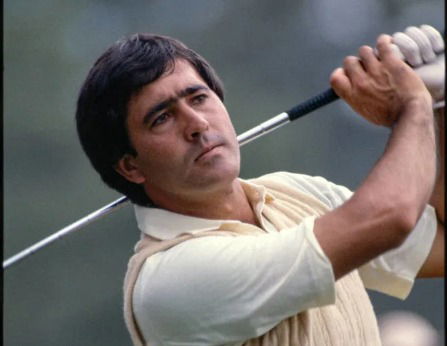
PGA, Golf Herren Masters Tournament – 1983 04/07/1983 Augusta, Georgia, USA Seve Ballesteros hits ball at Augusta National Golf Course during the 1983 Masters. Augusta Augusta National GC GA USA, EDITORIAL USE ONLY PUBLICATIONxINxGERxSUIxAUTxONLY Copyright: xFilexPhotox 17166821
At fifty, after a lifetime of brilliance and grit, Seve Ballesteros reached a moment he never imagined. Worn down and the weight of fading form, he stopped and faced a truth even legends struggle to admit: Sometimes, the game simply stops feeling worth it.
On a humid night in May 2007, Seve Ballesteros sat alone in a hotel room in Alabama, facing a truth he could no longer outrun. The loneliness hit him first, then the realization. “I felt very alone,” he recalled. “And I could hear my voice in my head: ‘Seve, what the hell are you doing here? What are you doing to yourself?’”
For two years, he had been “virtually retired,” yet still clinging to the scraps of a career that shaped European golf. Those years were so stressful for Seve, and after making a lot of efforts, he kind of understood. And that night, the denial cracked. “There had been too much stress, too much effort, for too many years… I had to say, ‘Seve, it’s not worth it.’ It’s time,” Seve admitted.
Turning 50 that year only sharpened the final blow. And weeks earlier, he had shot 86 and 80 at the Masters. In Alabama, playing his first event on the Champions Tour, he opened with 78 and 81. It wasn’t embarrassment that gutted him, but on the contrary, it was recognition. He thought of Muhammad Ali against Trevor Berbick and Sugar Ray Robinson against Joey Archer: greats staying too long. “Emotionally,” he admitted, “I felt like Ali after he was battered in his last fight.”
Yet even in that low point, the competitor in him flickered. Asked if finishing last sealed his decision, Seve bristled: “I didn’t finish last… I was at the back.” And fittingly, he birdied the 18th in his closing 73—one final flash of the defiant genius that defined him.
Soon after, rumors swirled about his health and even his state of mind. He dismissed the “lies and ugly fantasy,” though he couldn’t deny the toll. “They were checking the irregular beating of my heart… I think the heartbeat was a result of that trip to Alabama and making the decision to retire.” But as the noise faded and the dust settled, Seve knew the real story wasn’t in the rumors. It was in his own quiet acceptance of what came next.
Finally Accepting the Goodbye
When he finally announced his retirement at Carnoustie, the place where he debuted in the Open in 1978, the moment felt earned. “The British always appreciated me more,” he said. “It was the best place to say bye-bye.”
And with distance came peace. He played casually with his children, felt no pressure, and saw his career with clarity. “That’s why I would not change a single thing… When I look at the whole story, I feel very proud of myself.”
For Seve, leaving the game wasn’t surrender, but
acceptance. And after a lifetime of fighting, that may have been his bravest decision of all.
Written by

Dolly Bhamrick
Edited by

Joyita Das