Golf 101: The Ultimate Terminology Cheat Sheet for Beginners
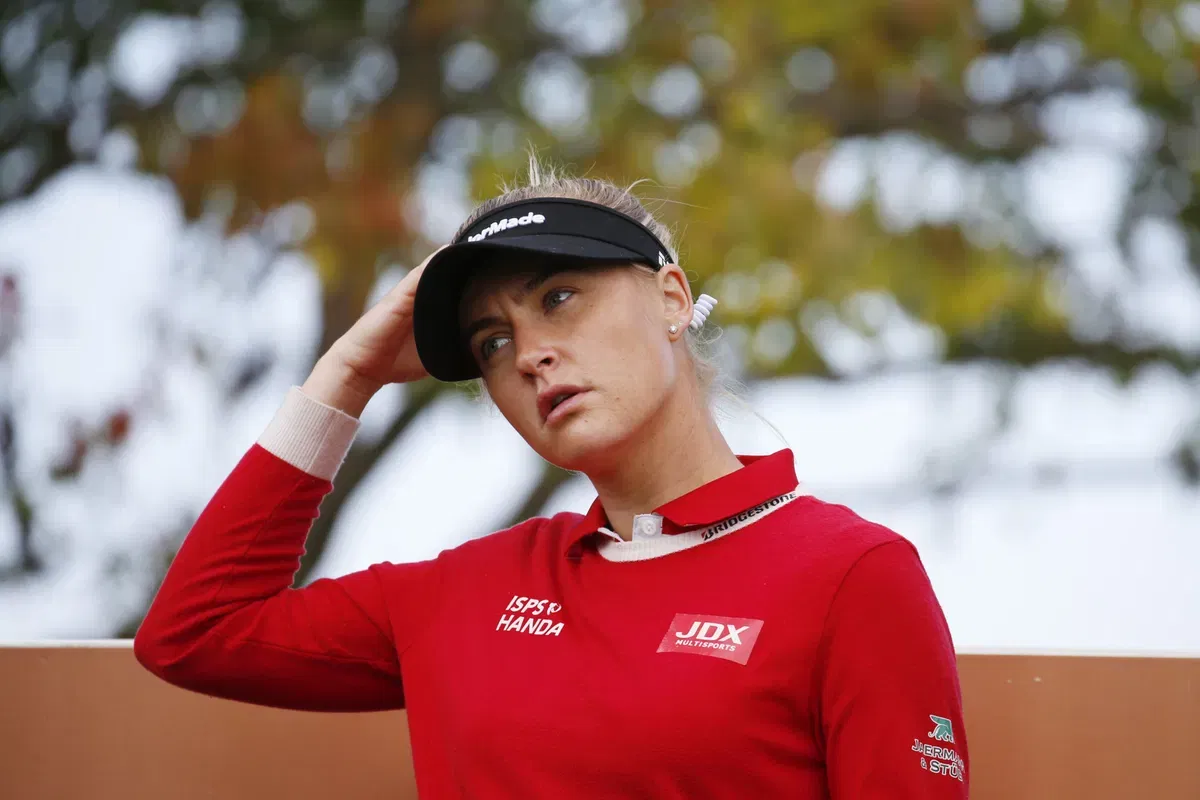
INDIANAPOLIS, IN - SEPTEMBER 27: LPGA, Golf Damen golfer Charley Hull waits on the 9th tee during the second round of the Indy Women In Tech on September 27, 2019 at the Brickyard Crossing Golf Club in Indianapolis, Indiana. Photo by Brian Spurlock/Icon Sportswire GOLF: SEP 27 LPGA - Indy Women in Tech Championship PUBLICATIONxINxGERxSUIxAUTxHUNxRUSxSWExNORxDENxONLY Icon270919260. Image Courtesy: IMAGO
INDIANAPOLIS, IN - SEPTEMBER 27: LPGA, Golf Damen golfer Charley Hull waits on the 9th tee during the second round of the Indy Women In Tech on September 27, 2019 at the Brickyard Crossing Golf Club in Indianapolis, Indiana. Photo by Brian Spurlock/Icon Sportswire GOLF: SEP 27 LPGA - Indy Women in Tech Championship PUBLICATIONxINxGERxSUIxAUTxHUNxRUSxSWExNORxDENxONLY Icon270919260. Image Courtesy: IMAGO
If you’ve ever heard someone say ‘Scottie just made a birdie’ or ‘Jeeno Thitikul made an eagle’ and felt completely lost, you’re not alone. Golf has its own language, and one that can feel confusing until you learn the basics. To make the sport easier (and a lot more fun), here’s a simple breakdown of the essential golf terms every beginner should know.
Golf Equipment Terms
- Irons: Numbered 1–9, with lower numbers going farther but being harder to hit. These clubs are your main tools for approach shots.
- Driver: The longest club in your bag, used mainly for tee shots. It’s built for maximum distance but can be tough to control for beginners.
- Wedges: High-lofted clubs for short shots and precise approaches. Common wedges include pitching, gap, sand, and lob wedges.
- Fairway Woods: Slightly shorter than a driver and easier to hit. Most golfers carry a 3-wood or 5-wood to reach long distances from the fairway.
- Putter: The shortest club, used on the green to roll the ball into the hole. Comes in blade or mallet styles.
Scoring and Rules
- Par: The expected number of shots to finish a hole. Courses are usually a mix of par 3s, 4s, and 5s.
- Stroke Play vs Match Play: Stroke play counts every shot across 18 holes. Match play is player vs player; each hole is a win, loss, or tie.
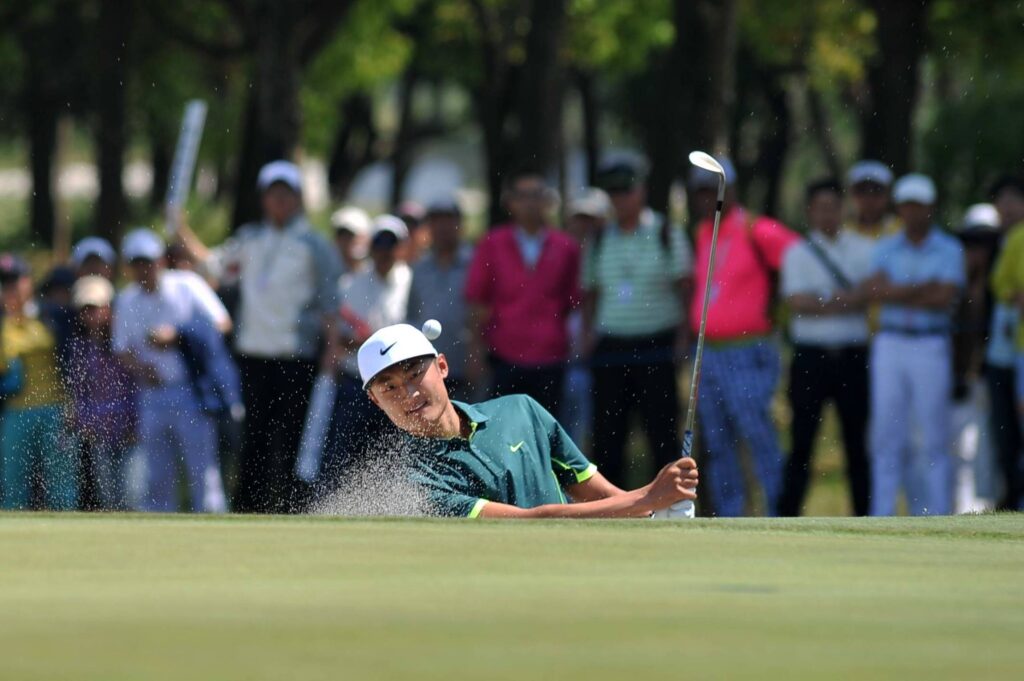
Li Haotong of China hits from a bunker during the final round of the Volvo China Open tennis tournament 2015 in Shanghai, China, 26 April 2015. David Howell narrowly failed to win his first European Tour title since 2013 as he finished a shot adrift of China s Wu Ashun in the Volvo China Open. Wu, 29, finished on nine under after a final-round one-under 71 to secure a maiden European Tour title in Shanghai. Howell, 39, looked on course to force a play-off until he bogeyed the par-five 18th to finish with a level-par 72. Wu, who also plays on the Japan Tour, is the first Chinese player to win a European Tour event in his homeland. David Howell finishes second to home winner Wu Ashun at China Open PUBLICATIONxINxGERxONLY 20150426_10330
Li Haotong of China hits from a bunker during the final round of the Volvo China Open tennis tournament 2015 in Shanghai, China, 26 April 2015. David Howell narrowly failed to win his first European Tour title since 2013 as he finished a shot adrift of China s Wu Ashun in the Volvo China Open. Wu, 29, finished on nine under after a final-round one-under 71 to secure a maiden European Tour title in Shanghai. Howell, 39, looked on course to force a play-off until he bogeyed the par-five 18th to finish with a level-par 72. Wu, who also plays on the Japan Tour, is the first Chinese player to win a European Tour event in his homeland. David Howell finishes second to home winner Wu Ashun at China Open PUBLICATIONxINxGERxONLY 20150426_10330
- Bogey: One over par. Double, triple, and quadruple bogeys follow the same logic.
- Ace (Hole-in-One): Getting the ball in the hole in a single shot. Extremely rare and highly celebrated.
- Eagle: A score of two under par on a hole; like making a 3 on a par 5.
- Birdie: A score of one under par. Much more common and always exciting.
Golf Swing Terms
- Slice: A shot that curves left to right (for right-handers). Very common among beginners.
- Hook: A hook in golf is the exact opposite of a slice. For a right-handed player, it’s a shot that starts straight and then curves sharply from right to left through the air.
- Fade: A smaller, controlled version of a slice — only a minor left-to-right movement.
- Putt: A gentle stroke on the green using a putter.
- Lip Out: When a putt touches the edge of the hole but spins out instead of dropping.

Golf Course Terms
- Caddy: A person who assists a golfer with advice, club selection, and course navigation.
- Tee Box: The starting point of each hole.
- Rough: Longer, thicker grass around the fairway — harder to hit from.
- Putting Green: The smooth, short grass around the hole, designed for putting.
- Fairway: The short-cut grass area golfers aim for after teeing off.
- Driving Range: The practice area where golfers hit balls before or between rounds.
- Bunker (Sand Trap): Sandy areas that require special technique to escape.
Learning these basic terms can instantly make golf feel less intimidating and a lot more enjoyable. The next time you’re watching a tournament or stepping onto a course, you’ll know exactly what everyone’s talking about.
Got the terms down? Do share, or ask questions, but keep learning
Written by

Dolly Bhamrick
Edited by

Joyita Das