
Golf Doesn’t Suffer From a Lack of Talent; It Suffers From a Lack of Connection
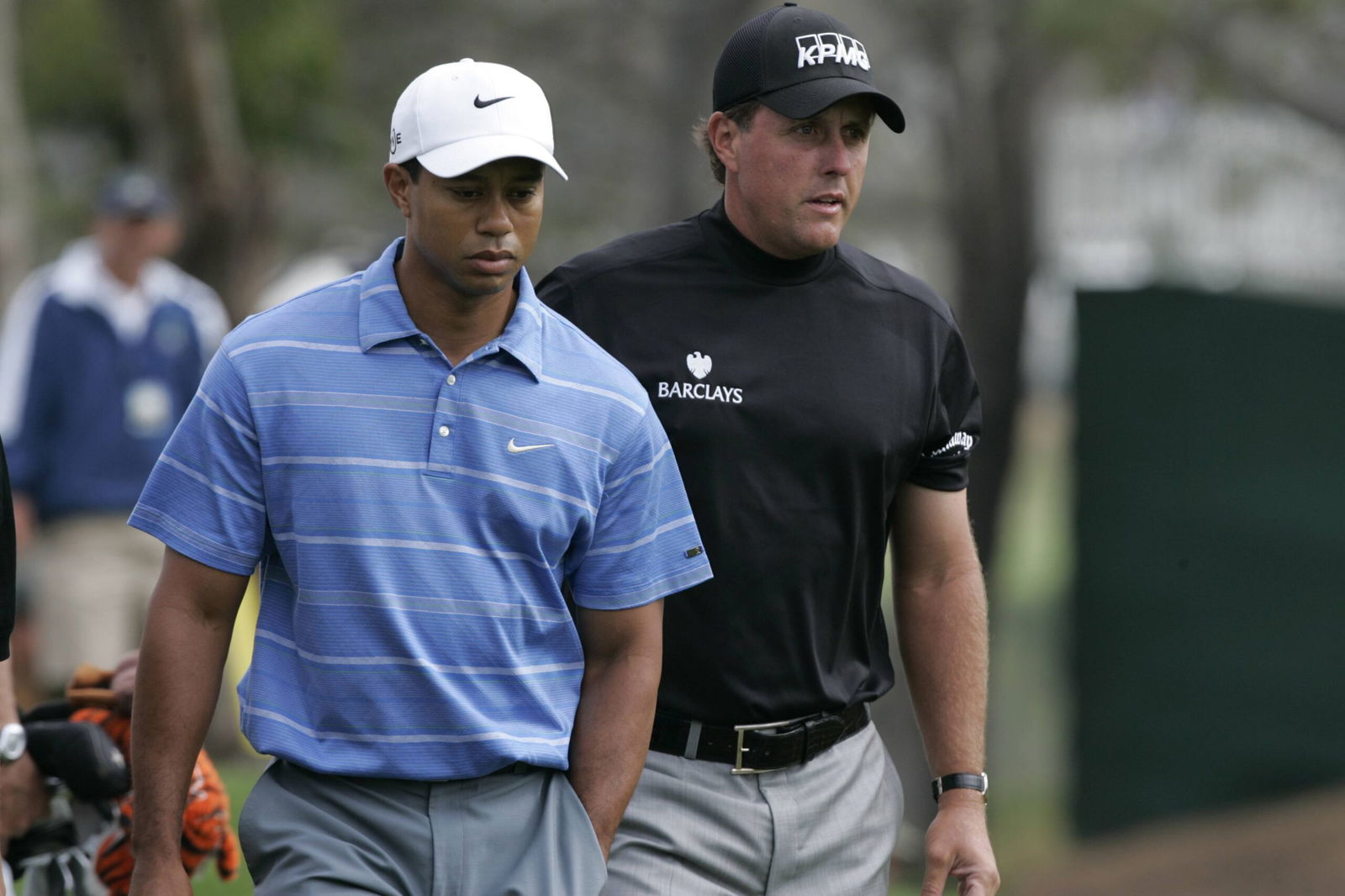
Bildnummer: 03739327 Datum: 12.06.2008 Copyright: imago/Icon SMI Tiger Woods (li.) und Phil Mickelson (beide USA) - PUBLICATIONxINxGERxSUIxAUTxHUNxRUSxSWExNORxONLY (Icon4790392); Eldrick, Vdig, quer, US Open 2008, PGA Tour San Diego Torrey Pines Golf Herren Einzel Gruppenbild Aktion Personen Image number 03739327 date 12 06 2008 Copyright imago Icon Smi Tiger Woods left and Phil Mickelson both USA PUBLICATIONxINxGERxSUIxAUTxHUNxRUSxSWExNORxONLY Icon4790392 Eldrick Vdig horizontal U.S. Open 2008 PGA Tour San Diego Torrey Pines Golf men Singles Group photo Action shot Human Beings
Bildnummer: 03739327 Datum: 12.06.2008 Copyright: imago/Icon SMI Tiger Woods (li.) und Phil Mickelson (beide USA) - PUBLICATIONxINxGERxSUIxAUTxHUNxRUSxSWExNORxONLY (Icon4790392); Eldrick, Vdig, quer, US Open 2008, PGA Tour San Diego Torrey Pines Golf Herren Einzel Gruppenbild Aktion Personen Image number 03739327 date 12 06 2008 Copyright imago Icon Smi Tiger Woods left and Phil Mickelson both USA PUBLICATIONxINxGERxSUIxAUTxHUNxRUSxSWExNORxONLY Icon4790392 Eldrick Vdig horizontal U.S. Open 2008 PGA Tour San Diego Torrey Pines Golf men Singles Group photo Action shot Human Beings
In 2026, golf’s biggest challenge isn’t the shrinking attention span, innovative shots, and competitions, or even tour politics.
Right now, the golf community is stacked with talent. But it still feels quiet. The reason? It’s the lack of connection between the golfers and the viewers.
Stars like Joaquin Niemann topped the longest hit charts with an average of 330.4 yards. And precision? That’s an undeniable expectation. And that’s where the problem lies. Fans have stopped tuning in because golf has lost its contrast and feels a bit remote.
Viewership peaked during the era of Tiger Woods. Fans didn’t tune in just to watch him lift trophies. With tension building in every round, they understood what was at stake. People watched him play because he invited people into battle. And that invitation matters now more than ever.

Italy: The Ryder Cup at Marco Simone Golf and Country Club, Rome, Italy on 01 October 2023: Team USA fans on the 1st tee during the Sunday singles of the Ryder Cup 2023 Rome Marco Simone Golf &amp Country Club Italy Copyright: xAlexxToddx
Italy: The Ryder Cup at Marco Simone Golf and Country Club, Rome, Italy on 01 October 2023: Team USA fans on the 1st tee during the Sunday singles of the Ryder Cup 2023 Rome Marco Simone Golf &amp Country Club Italy Copyright: xAlexxToddx
Today’s stars are remarkably consistent, but consistency alone rarely creates memory. Clean execution doesn’t guarantee drama. Fans remember turning points, not averages.
Take Rory McIlroy, for example. He became the headliner for golf, not because he achieved a career grand slam. Instead, fans got excited when they saw him win after failing for more than a decade.
McIlroy showed vulnerability, and that resonated with the audience. Well, he’s pretty open about it as well. People connected with him because he revealed his human side, thereby erasing all vulnerability. It also made people admire him a bit more.
How to Fix Golf in the Modern Era
One thing became crystal clear after the PGA Tour and LIV Golf competed against each other. Golf doesn’t need controversies. It needs context.
The PGA Tour–LIV divide has dominated headlines, but fans don’t engage through structure or governance. They engage through stories. Team golf, individual pursuits, and legacy chases all work when the narrative is clear. When it isn’t, the product struggles to hold attention.
Team events, individual pursuits, comeback arcs, and legacy chases all resonate when the narrative is clear and emotionally grounded. Without that context, even elite competition can feel detached, regardless of where it’s played.
The solution doesn’t require radical changes. Golf already has tension, difficulty, and consequence built into every shot. What it needs is perspective, helping fans understand why a moment matters, who is carrying the pressure, and what’s at stake beyond the score.
When moments are allowed to breathe, and players are seen as people rather than numbers, the game’s beauty and brutality naturally come through.
Written by

Krushna Pattnaik
Edited by

Oajaswini Prabhu